Türosette
Türosette: A Simple Guide That Makes Doors Look and Work Better
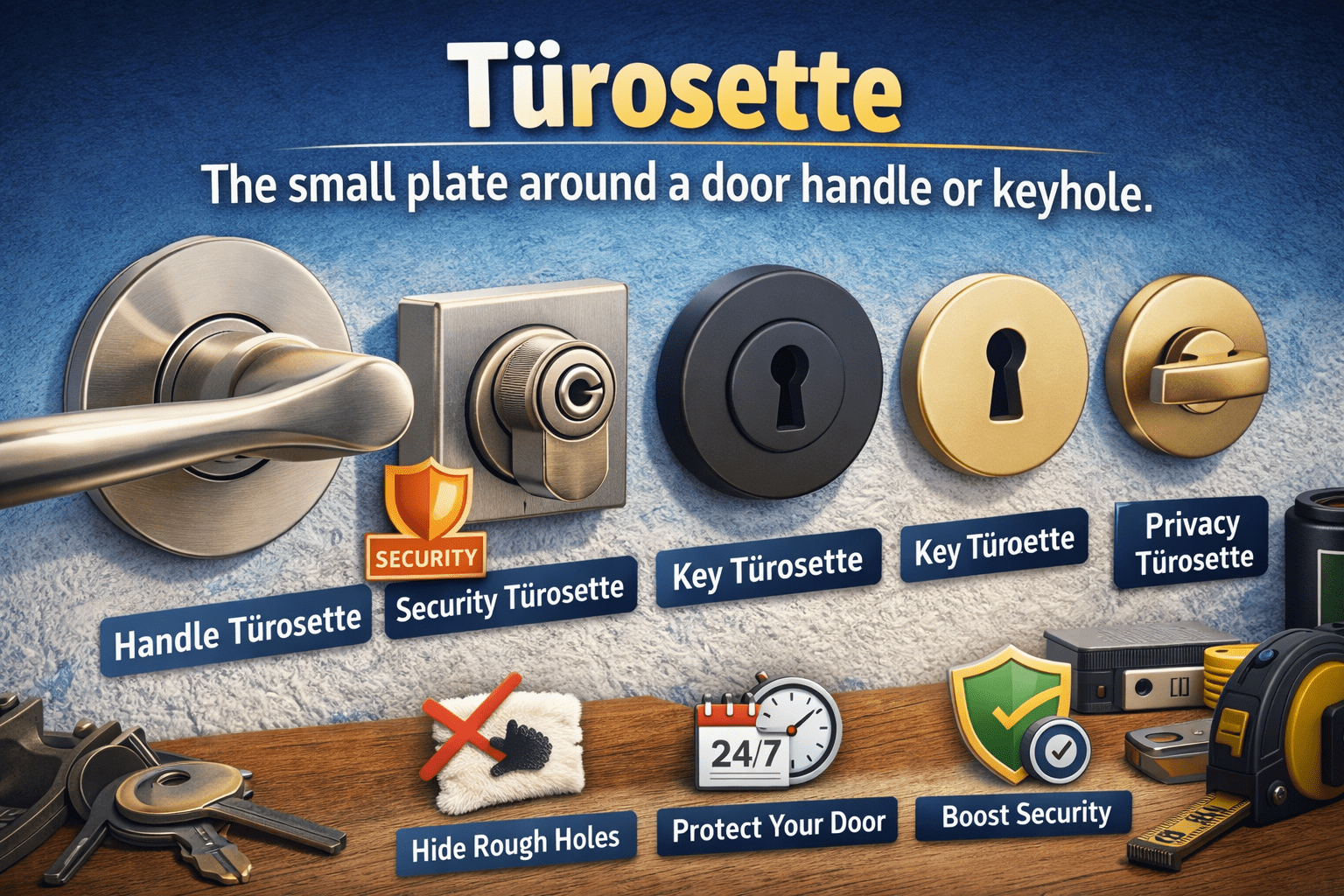
A Türosette is the small plate around a door handle or keyhole. Many people call it a “rosette” or “door rose.” Its job is simple. It covers the drilled hole, hides screws, and protects the door surface from scratches. It also makes the handle look finished and premium. In German door hardware, you’ll often see two pieces: a handle rosette and a key rosette. Some homes use a long backplate instead. A Türosette is cleaner and more minimal. That’s why it’s popular in new builds and remodels. If you want a sharp look in a hallway, office, or rental, this small part makes a big difference. Done right, the door feels tighter, looks neater, and stays cleaner.
What “Türosette” Means in Real Life
The word Türosette is used for door rosettes and trim plates. Think of it as the “frame” that sits under the handle. You may see round, square, or oval shapes. Many sets come as a pair for both sides of the door. Some rosettes are only for the handle. Others are for the lock or cylinder area. In Europe, you’ll also hear “escutcheon.” In the US, people often say “rosette” or “trim plate.” Same idea. A Türosette can be purely decorative, or it can add security. A security rosette can protect the cylinder from pulling and drilling attacks. So it’s not only about looks. It also supports stronger door performance when matched with the right lock and cylinder type.
Why a Türosette Matters More Than People Think
A door handle gets touched many times a day. Over time, the wood or paint around it can wear out. A Türosette takes that stress instead of the door surface. It covers small chips, messy drill edges, and old marks from past hardware. That’s very useful in rentals and flips. It also helps align the handle set. A well-made rosette keeps the handle tight and reduces wobble. That makes the latch feel smoother. Many people blame the lock when the real issue is loose hardware. A Türosette also boosts visual trust. Guests notice details. Clean hardware makes a place feel cared for. If you stage homes or manage Airbnb units, rosettes are a small upgrade with a strong impact.
Types of Türosette You’ll See (Handle, Key, Security)
Most doors use two kinds of Türosette parts. One sits under the lever handle. The other sits around the keyhole or cylinder. For interior doors with privacy locks, you may see a bathroom turn piece rosette. For exterior doors, you may see a cylinder rosette made for a Euro profile cylinder. Security versions are thicker and stronger. They can cover more of the cylinder area. Some include hardened steel rings. Some are anti-pull designs. That matters on front doors and side doors. There are also rosettes made for dummy handles, closet sets, and passage doors. So before buying, check the door use. Interior needs comfort and style. Exterior needs strength and good fit. Matching the right Türosette type avoids wasted money.
Türosette vs Backplate: Which Looks Better and Fits Easier?
A backplate is a longer plate behind the handle. A Türosette is smaller and separate. Backplates can hide old holes and wide wear marks. They also help when you need a fixed handle-to-key distance. A rosette setup feels more modern and clean. It also gives you freedom. You can place the handle and key rosette based on the door prep. Many European doors are drilled for rosettes. Many US doors are drilled for standard knob sets. That does not block you. You can still use rosettes with the right latch and spindle. The big difference is the look. Backplates feel classic and traditional. A Türosette feels minimal and sleek. Choose based on your door style and what holes you need to cover.
Picking the Right Size: What to Measure Before You Buy
A Türosette must match the door prep. Start with the door thickness. Many interior doors are 1⅜ inches in the US. Exterior doors are often 1¾ inches. Then check the handle spindle size and the lock type. Next, check the hole diameter under the rosette. If the hole is too wide, the rosette may not cover it. If it is too small, installation may get tight. Also check the center distance between handle and key area if your door has both. If you use a Euro cylinder setup, check cylinder projection and guard clearance. When in doubt, remove the old hardware and take clear photos. A Türosette should sit flat with no rocking. It should not rub the handle. Small measurements save big headaches.
Materials and Finishes: What Holds Up Best
You’ll find Türosette options in stainless steel, zinc alloy, aluminum, and brass. Stainless steel is strong and resists rust. It’s great for entry doors and humid areas. Solid brass feels premium and ages well. It also matches classic home styles. Zinc alloy is common and affordable. Quality varies by brand and coating. Aluminum is light and clean-looking, good for interior doors. Finish matters as much as metal. Satin nickel hides fingerprints. Matte black looks bold but can show scratches. Polished chrome looks sharp but shows smudges fast. Oil-rubbed bronze hides wear well. Choose a finish that matches your hinges and latch plate. A mismatched finish looks “off” in real life. A good Türosette finish should feel smooth and resist peeling.
Security Türosette: When You Should Upgrade
Not every door needs a security Türosette. Your front door often does. Side doors and garage entry doors also benefit. A security rosette can protect the lock cylinder. It can reduce risks like cylinder pulling or twisting. Some designs use hardened steel. Some include a rotating ring to resist drilling. These upgrades make sense if your door has a Euro cylinder, or if your area has higher break-in risk. If you rent out property, stronger hardware protects your investment. If your door already has a strong lock but a weak cylinder guard, that’s a weak point. A security Türosette is a smart fix. It also looks clean. Many security rosettes are made to look modern, not bulky. Pick one that sits tight and covers the cylinder well.
Interior Doors: Best Türosette Choices for Bedrooms and Bathrooms
Interior doors focus on comfort and style. A Türosette for interior use should feel smooth and quiet. For bedrooms, a simple lever rosette is enough. For bathrooms, you may need a privacy turn rosette. These sets use a thumb turn on one side and an emergency slot on the other. For closets, dummy handles may use rosettes that are decorative only. In kids’ rooms, pick finishes that hide fingerprints. Satin nickel and brushed finishes help. If you want a high-end look, match rosettes to modern lever handles with clean lines. Avoid sharp edges if kids use the door a lot. A well-fitted Türosette prevents scuffs around the handle. That keeps painted doors looking fresh for longer, even with daily use.
Exterior Doors: Weather, Rust, and Strong Fixings
Exterior doors face rain, heat, and dust. A Türosette for exterior use needs better protection. Stainless steel and high-quality coated brass work well. Also check the fixings. Through-bolts and back-to-back screws hold better than short wood screws. They reduce handle looseness over time. If you use a smart lock or electronic handle, confirm the rosette fits that system. Some smart handles have their own rosette plates. Don’t force a mismatch. For entry doors, check the seal area too. The rosette should not interfere with weather stripping. If your door sees sun, dark finishes may fade faster. Matte black can look amazing, yet choose a durable coating. A strong exterior Türosette helps the whole lock set feel solid and secure.
Installation Basics: A Clean Fit Without Wobble
Installing a Türosette is not hard, but details matter. Start with a clean door surface. Remove old glue, paint bumps, and dust. Place the rosette and confirm it covers the hole fully. Then align it with the handle spindle. If it uses a spring cassette, seat it properly. Tighten screws evenly. Don’t over-tighten or you can warp the rosette. Test the handle movement after each step. If the handle rubs, loosen and re-center. On key rosettes, confirm the cylinder turns without scraping. On privacy rosettes, confirm the thumb turn is smooth. A Türosette should sit flat and still feel tight after handle use. If it loosens quickly, switch to longer bolts or check door thickness spacers.
Common Problems and Fast Fixes
A loose handle is the most common complaint. People blame the latch, but it’s often the rosette screws. Tighten them evenly and use thread locker if needed. Another issue is a rosette that spins. That happens when the base plate is not seated well. Remove it and refit with proper alignment. Paint buildup can also stop a Türosette from sitting flat. Scrape the paint ridge and retry. Mis-sized rosettes can expose rough drill edges. In that case, choose a wider rosette diameter. For cylinder rosettes, a wrong hole pattern can block the key. Always test key movement before full tightening. If a door has old holes from a backplate, a small rosette may not cover them. In that case, use a larger Türosette or switch to a backplate set.
Complete Detailing Table: Türosette Types and Best Use
| Türosette Type | Where It Goes | Best For | Key Benefit | Common Shapes | Popular Finishes |
|---|---|---|---|---|---|
| Handle rosette | Under the lever handle | Interior + exterior | Covers drill hole, supports handle | Round, square | Satin nickel, matte black |
| Key rosette (keyhole) | Around keyhole area | Interior doors with keyed locks | Clean look, protects door surface | Round, oval | Chrome, bronze |
| Euro cylinder rosette | Around Euro profile cylinder | Exterior doors | Better fit for Euro cylinder | Round, square | Stainless steel, black |
| Security rosette | Over cylinder area | Front and side doors | Anti-pull, anti-drill options | Thick round, shield style | Stainless steel, dark bronze |
| Privacy turn rosette | Thumb turn area | Bathrooms | Simple privacy control | Round, square | Brushed nickel, black |
| Dummy rosette | Decorative handle base | Closets, double doors | Visual match, no latch stress | Round, square | Any matching set |
Real-World Example: A Small Upgrade That Changes the Whole Door
A friend renovated a small rental unit. The doors were fine, but the hardware looked tired. The paint around the handles was chipped. The handles also felt loose. Instead of changing doors, he installed new lever handles with a clean Türosette set. He chose a satin nickel finish to match hinges. The rosettes covered the worn paint marks perfectly. The levers stopped wobbling after he used through-bolts. The door suddenly felt “new.” Tenants noticed it during showings. It helped the unit feel cleaner and more cared for. That’s why this tiny part matters. A Türosette gives a crisp finish. It also reduces wear around the handle, which saves repainting later. For rentals, flips, and even office updates, it’s a quick win.
FAQs
1) What is a Türosette in simple words?
A Türosette is the small plate under a door handle or around a keyhole. It covers the drilled hole in the door. It hides screws and rough edges. It also protects the door surface from scratches. Many sets include one rosette for the handle and one for the lock area. It can be round or square. Some versions also improve security on entry doors by protecting the cylinder. If your handle looks unfinished, a Türosette is often the missing piece.
2) Is Türosette the same as an escutcheon?
In many cases, yes. People use different words. In the US, “escutcheon” often means a trim plate around a knob, handle, or keyhole. In German hardware, a Türosette is the rosette plate used for the handle and the lock area. The function is the same. It covers holes and makes the hardware look neat. Some escutcheons are larger or shaped like a long plate. A Türosette is usually smaller and separate.
3) Do I need a security Türosette for my front door?
If your front door has a cylinder lock, a security Türosette is a smart upgrade. It can protect the cylinder from pulling and drilling. That adds a strong safety layer without changing the whole lock. It’s most helpful on side doors and front doors that face public access. If you live in a low-risk area, a standard rosette can still be fine. If you want stronger protection, a security Türosette gives better defense and still looks clean.
4) Why does my door handle feel loose even after tightening?
Loose handles often come from weak fixings or uneven tightening. A Türosette set with through-bolts holds better than short screws. Also check if the rosette base plate is seated flat. Paint ridges can stop it from sitting properly. Tighten screws evenly and test the handle movement. If the handle still wobbles, the spindle length may be wrong for the door thickness. In many cases, swapping to a higher-quality Türosette set solves the looseness.
5) Can I put a Türosette on any door in the USA?
Most doors can take a Türosette, but you must match the door prep and lock type. US doors often use standard bore holes for knob sets. Rosette-style lever handles may need a latch setup that fits your door edge. If your door uses a Euro cylinder, it’s less common in the US but still possible. Measure door thickness, hole sizes, and the latch backset before buying. A Türosette works best when the rosette fully covers the old holes and sits flat.
6) What finish is best for a home with kids and pets?
Satin nickel and brushed finishes hide fingerprints and tiny scratches well. Matte black looks bold, but it can show wear on high-touch doors. Polished chrome looks sharp, yet it shows smudges fast. If you want low maintenance, brushed finishes are a safe pick. Also choose a Türosette with a durable coating. Cheap coatings can chip. A good finish keeps the door looking clean even with daily use from kids, pets, and guests.
Conclusion
A Türosette is small, yet it changes how a door looks and feels. It hides rough holes, protects paint, and makes hardware look complete. It can also add real security on entry doors when you pick a strong cylinder rosette. If your handle feels loose, looks outdated, or leaves marks on the door, start with the rosette setup. Measure your door, match the lock type, and choose a finish that fits your space. If you’re updating a rental or flipping a home, this is one of the fastest upgrades you can do. Want the best fit fast? Share your door type and lock style, and I’ll tell you the exact Türosette type to choose.
| Read More Informative Blogs Like This. Tap Here 👉 Irri Sys Explained |
About the Author