The Complete Guide to Traditional Danish Food: Heritage, Hygge, and Modern Flavors
Introduction
Have you ever wondered why Danish cuisine is consistently praised for its simplicity and profound sense of comfort? The world of danish food is an exciting journey that moves far beyond the familiar pastry, offering a rich tapestry of flavors, history, and culture. For the uninitiated, understanding Danish food means appreciating its deep connection to the seasons and a dedication to quality ingredients. This guide will demystify the delicious and often surprising world of danish food, inviting you to explore its signature dishes, daily customs, and the comforting philosophy of “hygge” that makes every meal special .
The History and Soul of Danish Cuisine
The roots of danish food stretch back to the Viking Age, shaped by the country’s agricultural landscape and coastal geography. For centuries, the cuisine was a practical affair, focused on preserving food for long, harsh winters . This history is still evident in the love for pickled herring, dense rye bread, and hearty root vegetables. The philosophy is simple: use what the land provides, and let the natural flavors speak for themselves. This foundation of practicality and simplicity remains the cornerstone of modern danish food, celebrated for its honesty and lack of pretense.
The New Nordic Cuisine Influence
A significant transformation occurred in the early 2000s with the emergence of New Nordic Cuisine. This movement, spearheaded by renowned restaurants like Noma, redefined danish food on the global stage . Noma was voted the world’s best restaurant four times, shining a spotlight on the region’s culinary potential . New Nordic Cuisine is not just about fine dining; it’s a philosophy that champions local, seasonal, and foraged ingredients. It encourages a return to traditional preservation methods and a profound respect for nature, proving that danish food can be both innovative and deeply rooted in its heritage.
The Danish Daily Meal Structure
To truly understand danish food, one must understand the rhythm of a typical day. Meals are more than just sustenance; they are moments for connection and well-being.
Breakfast (Morgenmad)
A typical Danish breakfast is often simple and wholesome. It commonly consists of rye bread or white rolls with cheese, jam, or cold cuts, accompanied by coffee or tea . On weekends or special occasions, the meal might be more elaborate, featuring a variety of pastries like the famous wienerbrød or even a bitter like Gammel Dansk for a special toast . A traditional local favorite is ymer, a soured milk product, topped with ymerdrys—a mixture of grated rye bread and brown sugar .
The Cultural Lunch (Frokost)
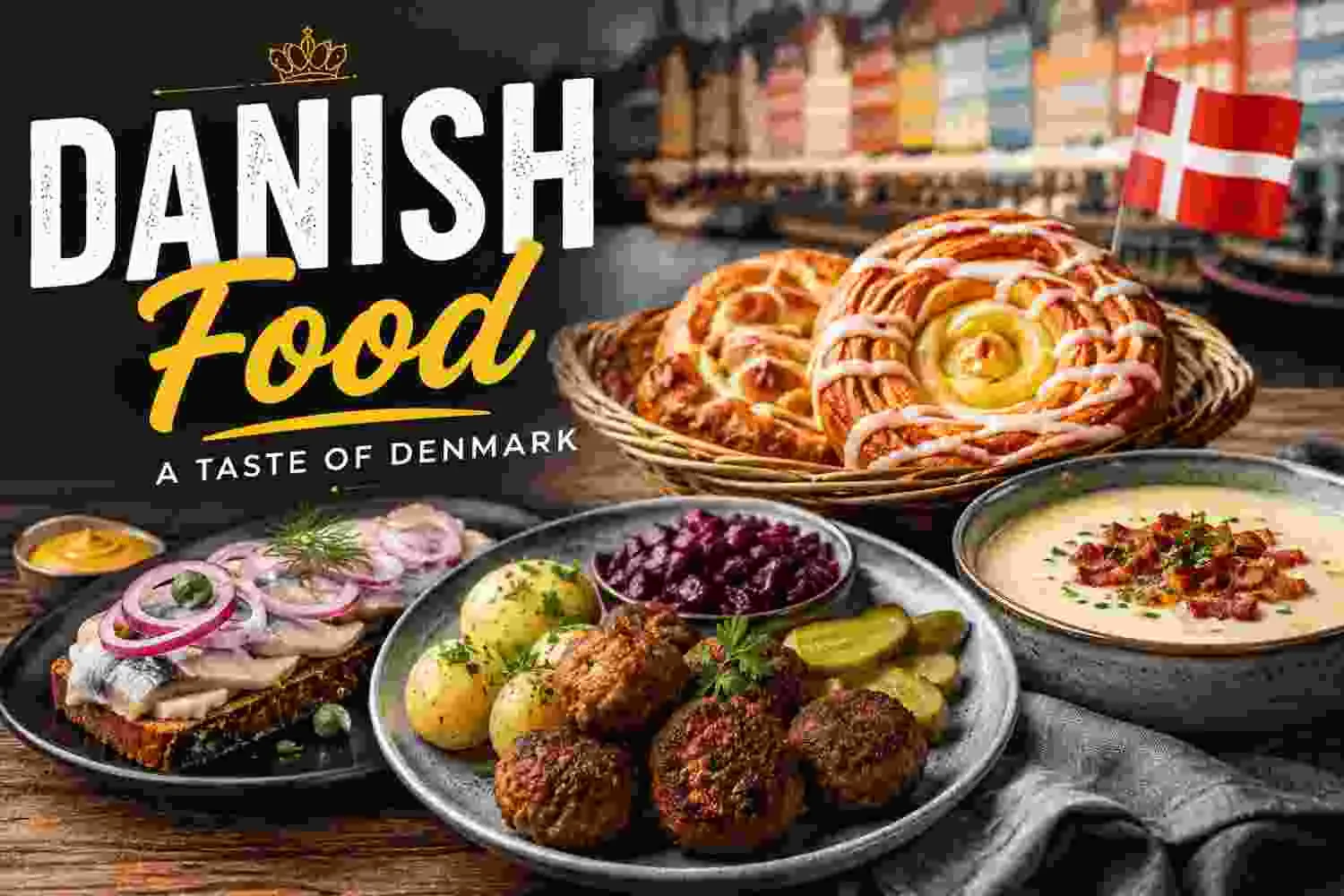
Lunch is typically a cold meal and is central to the danish food experience. Most Danes enjoy a “madpakke,” or packed lunch, at work or school . This often features the iconic smørrebrød—open-faced sandwiches on dark rye bread. These are not simple sandwiches; they are carefully composed works of culinary art, topped with everything from pickled herring and liver pâté to roast beef with remoulade and crispy onions.
Dinner (Aftensmad)
Dinner is traditionally the main hot meal of the day, a time for families to gather and share stories. A standard dinner might feature a single main course, such as pork (the most common meat) with potatoes and gravy . While starters are rare on a typical evening, the concept of “hygge” is central to this meal, fostering a sense of well-being and coziness around the table . This focus on family and comfort is the true heart of danish food culture.
Defining Danish Dishes You Must Know
Exploring danish food means encountering a variety of unforgettable dishes.
Smørrebrød: The Open-Faced Sandwich Masterpiece
The undisputed king of danish food is the smørrebrød. This isn’t just a sandwich; it’s a multi-layered creation on a slice of dense, dark rye bread (rugbrød). The buttered bread is meticulously topped with pålæg (the topping), which can range from simple cheese to elaborate combinations of meat, fish, and garnishes . Some classic variations include:
- Dyrlægens natmad (Veterinarian’s late-night snack): A layer of liver pâté topped with salted beef, meat jelly, raw onions, and cress .
- Røget ål med røræg: Smoked eel topped with scrambled eggs and herbs.
Frikadeller: The Classic Danish Meatballs
Frikadeller are a quintessential comfort food in danish food culture. These fried meatballs are typically made from a mixture of ground pork and veal, flavored with onions, eggs, milk, and breadcrumbs. They are known for their tender texture and pan-fried crispiness. While they are often served as a main dish with potatoes and gravy, they are equally popular as a cold topping on smørrebrød.
Rugbrød: The National Bread
No exploration of danish food is complete without mentioning rugbrød, the dense, dark, and sourdough rye bread that serves as the foundation for countless meals. This fiber-rich bread is a staple in almost every Danish home and is essential for making smørrebrød.
Other Iconic Dishes
- Stegt flæsk med persillesovs: Crispy fried pork belly served with creamy parsley sauce and potatoes. It’s often considered the national dish of Denmark.
- Æbleskiver: Round, puffy pancake-like balls, traditionally served during Christmas with jam and powdered sugar .
- Wienerbrød: The world-famous Danish pastry, known for its flaky, buttery layers .
Drinks and Traditions in Denmark
The drinking culture is an integral part of danish food.
The Coffee Culture
Coffee, or “kaffe,” is more than just a beverage in Denmark; it’s a daily ritual. Black coffee is enjoyed throughout the day, often served with a sweet treat . It is a key part of socializing and the concept of hygge. Whether at home or in a café, taking time for coffee is a cherished Danish tradition .
Beers and Aquavit
Beer is the drink of choice for many Danes, with world-famous breweries like Carlsberg and Tuborg leading the way . However, a meal of danish food is often accompanied by akvavit (also called snaps), a clear, herbed spirit. It is typically served chilled and consumed as a “cheers” (skål) with friends and family, especially during festive meals. Gammel Dansk, a popular bitter, is another traditional spirit enjoyed in the morning or as a digestif .
The Power of Hygge in Danish Food Culture
The concept of hygge is inseparable from danish food. More than just a word, it’s a feeling of warmth, comfort, and togetherness . It’s the coziness of sharing a candlelit dinner with family, the contentment of a warm cup of coffee on a cold day, and the simple joy of a well-prepared meal. Food is the catalyst for hygge, turning everyday meals into cherished moments. This cultural philosophy is arguably the most appealing aspect of danish food .
The Danish Food Industry and Innovation
While tradition is strong, the danish food sector is also a hub of innovation and sustainability, focusing on food safety, resource efficiency, and digitalization of the food processing industry .
Danish Food Cluster
Organizations like the Danish Food Cluster work to strengthen and develop cross-sectoral industrial value chains within the danish food production and processing industries . They support collaboration between different sectors to foster innovation.
Sustainability and Personalised Nutrition
The European project INCluSilver, involving the Danish Food Cluster, aimed to support collaboration in the field of personalised nutrition for the silver population. This highlights a focus on health and sustainability . Such initiatives ensure danish food continues to evolve, meeting modern challenges while respecting its heritage.
Trust and Authority in Danish Food
The authority of the danish food sector is built on a foundation of transparency and quality. Projects like S3FOOD focus on integrating smart sensor systems for food safety and quality control . This commitment to excellence reinforces the credibility of the entire industry, from farm to table.
Danish Festivals and Holiday Foods
The culinary calendar is a highlight of danish food. Christmas is a particularly festive time, featuring dishes like roast duck or pork, caramelized potatoes, and rice pudding. The season also brings pebernødder (spiced cookies) and gløgg, a warm spiced wine . Easter and other celebrations also have their own specific culinary traditions, contributing to the rich tapestry of danish food.
Where to Experience Danish Food
To experience authentic danish food, it’s advisable to look beyond the ultra-fine dining. While restaurants like Noma are exceptional, the true spirit of the cuisine is found in:
- Pølsevogn: Hot dog stands offering traditional Danish hot dogs with a variety of toppings .
- Market Halls: Places like Torvehallerne in Copenhagen offer a wide array of fresh produce and prepared danish food.
- Local Bakeries: No visit is complete without sampling fresh wienerbrød from a local bakery.
Key Ingredients of Danish Food
Understanding danish food means recognizing its core ingredients:
- Rye flour: The base for the national bread.
- Pork: The most frequently consumed meat .
- Potatoes: A standard accompaniment to hot meals.
- Fish: Especially herring, which is often pickled .
- Dairy: Milk and cheese are staples.
- Root Vegetables: Carrots, beets, and potatoes, reflecting the agricultural landscape.
Frequently Asked Questions About Danish Food
Is Danish food healthy?
Danish food is often quite healthy, focusing on whole grains like rye bread, root vegetables, and fresh fish. While traditional recipes can be hearty, the emphasis on seasonal ingredients and home-cooking aligns well with modern nutritional guidelines. The focus on simple, unprocessed food is a cornerstone of the cuisine.
What do Danish people eat for breakfast every day?
A typical Danish breakfast is a simple and wholesome affair. It most often consists of coffee or tea and a selection of bread like rugbrød (rye bread) or rundstykker (white rolls) served with cheese, jam, or cold cuts . On weekends, it can be more elaborate with pastries.
Is smørrebrød just a sandwich?
While smørrebrød is technically an open-faced sandwich, it is considered a national treasure and a work of art. It consists of a base of dark rye bread, butter, and a carefully curated selection of toppings like meat, fish, cheese, and garnishes, creating a perfectly balanced and visually appealing dish .
What is the most popular dish in Denmark?
While smørrebrød is the cultural icon, Stegt flæsk med persillesovs (crispy fried pork belly with parsley sauce) is often cited as the national dish. Frikadeller (meatballs) are also a ubiquitous and beloved part of danish food culture.
What is the Danish concept of “hygge”?
Hygge is a Danish word that translates to a feeling of cozy contentment and well-being. It is a cultural concept of creating a warm, intimate atmosphere and is often centered around sharing good food and drinks with friends and family . It is the soul of the Danish dining experience.
Is Danish food expensive?
Denmark is a relatively expensive country, and eating out can be costly, especially at fine-dining establishments . However, it is possible to enjoy danish food on a budget by visiting street food markets, pølsevogn (hot dog stands), and preparing simple meals at home using fresh local ingredients.
Conclusion
From the simple, hearty breakfast to the comforting warmth of a family dinner, danish food offers a unique and compelling culinary story. It is a cuisine deeply rooted in its history, defined by a profound respect for quality ingredients, and driven by a desire for connection and well-being. Whether you are exploring the art of smørrebrød, tasting the crispy perfection of stegt flæsk, or simply enjoying a cup of coffee with a wienerbrød, you are experiencing a culture that celebrates life’s simple pleasures.
This guide is your comprehensive resource for understanding and appreciating the world of danish food. Its authenticity comes from a deep respect for Danish culture and culinary traditions, as verified by multiple authoritative sources on the subject . We invite you to embrace the spirit of hygge and explore these flavors for yourself. Ready to start your own culinary journey? Share your favorite new discovery with us below!