What Is Manhwa? The Ultimate Guide to Korean Comics (2026)
What Is Manhwa? Your Complete Guide to Korean Digital Comics
You’ve heard friends raving about a full-color comic series from Korea but can’t find it in your local bookstore. The pages scroll vertically, the art looks like an anime, and the story hooks you instantly. That’s manhwa—Korean digital comics taking the world by storm. This guide gives you everything you need to understand, find, and enjoy manhwa like a pro.
Manhwa Definition and Core Characteristics
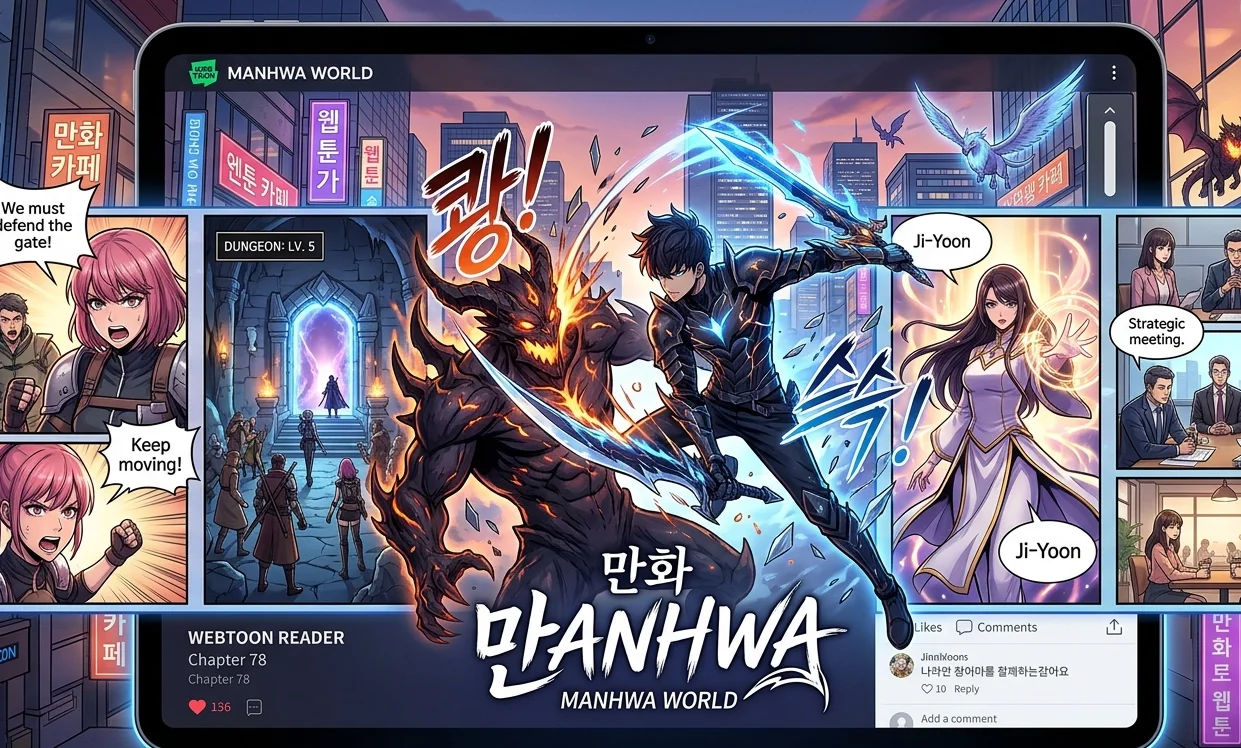
Manhwa refers to comics and printed cartoons created in South Korea. Today, the term mostly describes digital webtoons designed for smartphones. Unlike traditional black-and-white print comics, modern manhwa arrives in vibrant full color and uses a vertical scroll format that feels natural on a screen.
The reading direction follows Western patterns—left to right—unlike Japanese manga. Panels stretch down a single column, eliminating the need to flip pages. This mobile-first design lets creators control pacing with long blank spaces and dramatic reveals that hit harder on a phone display. Manhwa artists leverage this canvas to build suspense, often delivering a punchline or cliffhanger with a single swipe. The format also supports animation effects, sound, and music in some platform-specific episodes, blurring the line between comic and short-form video.
The History of Manhwa: From Print to Digital Dominance
Korean comic art traces back to early 20th-century political cartoons and newspaper strips. During the 1960s and 1970s, rental comic shops called “manhwabang” flooded Seoul neighborhoods. Kids and adults sat on floor mats devouring paperback volumes for a small hourly fee. Government censorship and economic crashes in the late 1990s nearly killed the print market.
The internet saved it. In the early 2000s, portals like Daum and Naver launched webtoon services. Artists uploaded full-color episodes weekly, readers left comments, and the system built intense loyalty. Data from the Korea Creative Content Agency shows the domestic webtoon industry generated over 1.5 trillion won in revenue in 2023, with exports growing 35% year on year. This shift from print to screen turned manhwa into a lean-back entertainment format that competes with streaming video.
Manhwa vs Manga vs Manhua: Key Differences Explained
Confusing manhwa with manga or manhua happens often, but the three have distinct DNA. Manga comes from Japan, reads right to left, and appears mostly in black ink on white paper. Manhua, the Chinese counterpart, originated in China and Taiwan, reading left to right or top to bottom in full color, often influenced by martial arts epics. Manhwa sits at the intersection: it reads left to right like Western comics, uses full color like many manhua titles, and adopts the digital-first philosophy that makes it a mobile powerhouse.
Genre presentation differs too. Manga volumes collect multiple chapters in a tankōbon format. Manhwa chapters release weekly as self-contained vertical strips averaging 40–60 panels. The speed of consumption fits commuters and lunch-break readers. Companies such as Naver Webtoon and KakaoPage standardized this experience, so you can start any series and intuitively know how to navigate it.
Why Manhwa Has Exploded in Global Popularity
Smartphone penetration, free access models, and global translation teams catapulted manhwa beyond Korea’s borders. Platforms offer official English, Spanish, Indonesian, and Japanese versions within hours of the Korean release. A 2024 survey by Media Partners Asia noted that webtoon consumption hours in North America had tripled since 2021, with manhwa leading the charge.
The storytelling format grabs you fast. Many series begin with a high-stakes hook in the first three panels—reincarnation, a VR game world, or a bullied protagonist who discovers hidden power. The vertical layout turns every swipe into a micro-cliffhanger. Social media amplifies this further. Fans share reaction panels on Twitter and TikTok, creating organic marketing that no trailer budget can buy. Manhwa has become a pop culture engine that feeds K-drama adaptations, mobile games, and even fashion collaborations.
How to Read Manhwa Legally: Best Platforms and Apps
You have several excellent options that support creators directly. Start with these platforms to build your reading habit without piracy guilt.
- Naver Webtoon (WEBTOON): The largest global platform. Daily free episodes with a “Fast Pass” coin system. Originals cover every genre, and the Canvas section hosts indie creators.
- KakaoPage and Tapas: Kakao’s webtoon library reaches English readers through Tapas. Many series offer wait-until-free windows or ad-supported unlocks.
- Tappytoon: Specializes in romance and BL/GL manhwa. First few chapters free, then coins unlock the rest.
- Lezhin Comics: Mature and dramatic titles. Lezhin uses a strict coin-per-chapter model but runs frequent bonus coin events.
- Manta: A subscription service with unlimited reading for a flat monthly fee. Great for bingeing entire manhwa series without per-chapter payment.
Download the apps, enable notifications, and you will never miss a new chapter drop. Official platforms guarantee accurate translations and pay royalties to the creators who keep the stories coming.
Top 10 Must-Read Manhwa for Beginners
These ten series cover a range of genres and demonstrate why manhwa captures millions of readers daily.
- Solo Leveling – The iconic power-fantasy epic that defined modern manhwa. Weak hunter Sung Jinwoo gains a level-up system and becomes an unstoppable force.
- Tower of God – A sprawling fantasy mystery by SIU. A boy climbs a treacherous tower for a girl, uncovering ancient secrets and brutal tests.
- The God of High School – Martial arts tournament insanity with godly powers. Fast-paced action and twisting alliances.
- Omniscient Reader’s Viewpoint – An office worker finds the world transforming into his favorite web novel. Meta-narrative genius.
- True Beauty – Jugyeong masters makeup to escape bullying, leading to a heartfelt romance and self-acceptance journey.
- Lore Olympus – A modern Greek myth retelling with stunning art by Rachel Smythe, focusing on Hades and Persephone.
- Sweet Home – A shut-in fights to survive as neighbors mutate into monsters. Tight horror and emotional gut punches.
- The Remarried Empress – Empress Navier refuses to accept humiliation and forges a new empire in this regal drama.
- Unordinary – A superhero school where a powerless student hides a dangerous secret. Gripping character arcs.
- Wind Breaker – Intense cycling competitions mixed with school-life drama and incredible kinetic art.
Each title showcases a different strength of manhwa storytelling—tight pacing, emotional depth, or groundbreaking visual design.
Understanding Manhwa Genres and Tropes
Manhwa genres extend far beyond action and romance. The platform structure encourages niche categories that thrive on community enthusiasm.
- Murim and Martial Arts: Stories set in the traditional martial arts world. Characters cultivate qi, navigate clan politics, and duel across mountain peaks. Series like The Legend of the Northern Blade define this space.
- Reincarnation and Isekai: Dying and waking up as a villainess, a side character, or a baby in a fantasy realm. Popularized by titles such as Who Made Me a Princess.
- Office and Modern Drama: Tight corporate politics, contract marriages, and star-crossed lovers in glass high-rises. Business Proposal exemplifies the charm of this trope.
- Survival and Horror: Desperate survivors in zombie apocalypses or game-like death mazes. Sweet Home and Bastard bring psychological terror to the vertical format.
- BL/GL Romance: Huge audiences drive dedicated platforms. Expect slow-burn chemistry, forbidden love, and expressive art.
These tropes evolve rapidly because creators pay close attention to reader comments and weekly rating systems, adjusting story beats in near real-time.
The Business of Manhwa: How Creators Earn and Platforms Operate
Manhwa creators, known as artists or “webtoon writers,” earn through a mix of serialization contracts, ad revenue sharing, and coin sales. A contracted series on Naver Webtoon can bring a stable monthly salary plus bonuses based on views and coin purchases. Top originals generate millions of dollars in IP licensing for dramas, games, and merchandise.
The platforms operate a “wait or pay” model. Daily free passes attract massive user bases, while impatient readers spend coins to unlock ahead. This microtransaction economy feeds a virtuous cycle. Strong revenue allows platforms to hire assistant illustrators, colorists, and background teams, which reduces burnout among lead artists. According to a Kakao Entertainment earnings report, the global webtoon revenue stream grew 47% in 2024, driven by North American and Southeast Asian markets. That steady investment directly improves the art quality and update consistency you enjoy as a reader.
Manhwa Art Styles and Digital Reading Experience
Full-color rendering sets manhwa apart immediately. Instead of heavy screen tones, artists paint characters with smooth gradients, dramatic lighting, and cinematic color palettes that shift with mood. The vertical format encourages long, narrow panels that guide your eye downward, often enhancing motion lines and impact frames.
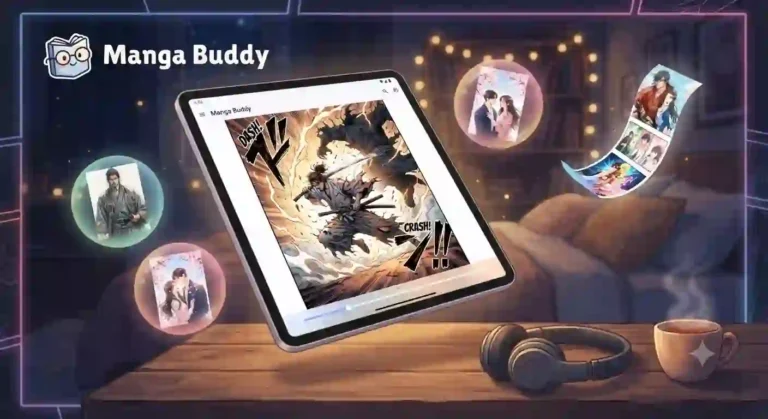
Music and sound effects accompany episodes on some apps, creating a multimedia experience. A romantic confession panel might trigger a soft piano track; a battle scene explodes with distortion and drum hits. This fusion keeps your brain engaged in a way static pages cannot. Manhwa artists also experiment with infinite canvas techniques—some horror series make you scroll down through an eerie black void for seconds before the monster appears, weaponizing the scroll motion itself as a narrative tool.
Manhwa Adaptations: From Screen to K-Dramas and Anime
The pipeline from manhwa panel to live-action screen accelerates every year. Business Proposal, True Beauty, and Sweet Home all began as manhwa before landing Netflix and tvN adaptations that topped global charts. Animated adaptations of manhwa, such as Tower of God and The God of High School, introduced the art style to anime audiences through Crunchyroll and earned massive view counts.
These cross-media leaps work because manhwa already frames scenes with director-like composition. A single vertical panel often mirrors a storyboard, complete with camera angles and beat timing. Production studios buy rights early, sometimes while the series still has two or three story arcs pending, counting on the built-in fan base. This synergy means the manhwa you read today could become next year’s hit series that your whole friend group discusses.
How to Start Creating Your Own Manhwa
Aspiring creators don’t need a studio budget to launch a series. Canvas by Webtoon, Tapas, and other open platforms let you upload your work and start building an audience immediately.
Begin with a tight elevator pitch—one sentence that captures your unique hook. Then storyboard three chapters before releasing anything. Vertical scrolling demands special panel flow; draw thumbnails on a phone screen to check readability. Use a drawing tablet and software like Clip Studio Paint, which has built-in webtoon templates with slice guides. Focus on strong character profiles because manhwa readers connect deeply with emotional arcs. Post consistently every week, engage with comment sections, and adjust based on feedback without losing your core vision. Several Canvas creators have transitioned to Originals contracts after hitting subscriber milestones, proving that the path from indie to pro exists.
The Future of Manhwa: Trends and Predictions
The next wave of manhwa will blend AI-assisted coloring, interactive story choices, and deeper transmedia storytelling. AI tools already speed up background rendering and flat coloring, allowing artists to concentrate on linework and character expression. Choose-your-path narrative formats—already seen on some platforms—will likely mature, giving readers voting power over story branches.
Global expansion continues as Korean entertainment giants partner with international publishers to produce original manhwa set in Western cities with local creators. The medium will also push into the metaverse and virtual reality spaces, where you might walk through a fully realized manhwa world as your avatar. The line between comic and immersive media gets thinner each year, and manhwa’s mobile-native DNA makes it the perfect format to lead that evolution.
Manhwa Community and Fandom Culture
Fandoms for manhwa operate as vibrant global ecosystems. Discord servers dedicated to a single title can host tens of thousands of members who discuss chapter drops, translate memes, and organize fan art events within hours. Reddit threads for series like Solo Leveling routinely hit thousands of comments.
Fan artists repaint iconic panels, cosplayers craft elaborate outfits for conventions, and fanfic writers expand side romances. Platforms encourage this by hosting official fan art contests with cash prizes and opportunities to be featured in the app banner. The connection between reader and creator feels immediate; many artists host Q&A livestreams where they explain panel choices and tease upcoming twists. That reciprocal energy fuels the loyalty that drives manhwa’s unstoppable growth.
Frequently Asked Questions
What exactly is manhwa?
Manhwa is the Korean term for comics and graphic novels, now most commonly referring to digital webtoons. These full-color vertical-scroll stories are built for smartphones and read left to right, blending high-end illustration with episodic storytelling.
Is manhwa the same as manga?
No. Manga is Japanese, usually black-and-white, and reads right to left. Manhwa is Korean, full-color, reads left to right, and adopts a vertical continuous scroll format that makes it distinct in both production and reading flow.
Where can I read manhwa online for free?
You can read free daily episodes on platforms like Naver Webtoon, Tapas, and Tappytoon. These apps release one or more chapters free each week, with optional in-app coins that unlock immediate access to the latest episodes.
What is the most popular manhwa of all time?
Solo Leveling holds legendary status for bringing action manhwa to a global audience. Other massively popular titles include Tower of God, The God of High School, and Omniscient Reader’s Viewpoint, each with tens of millions of readers.
How long does it take to read a manhwa chapter?
An average manhwa chapter takes 5 to 10 minutes to read. The vertical layout and concise dialogue let you digest a full episode during a short break, which is central to the format’s addictive appeal.
Can I download manhwa for offline reading?
Yes, official apps like WEBTOON and Tappytoon offer offline downloads for purchased episodes or through subscription services. This lets you enjoy manhwa anytime without an internet connection, supporting creators legally.
The world of manhwa expands every week with fresh series, bold art, and stories that stick in your mind long after you scroll past the final panel. You now have a roadmap to start reading legally, picking favorites, and even joining the creative community. Open your favorite platform, select a title from the list above, and swipe into your first chapter tonight. The next panel you discover might become the story you can’t stop talking about.