Poison Tree Tattoo Meaning: Hidden Anger Symbolism
Introduction:
You see a striking tattoo of a dark tree with weeping branches and a single glowing fruit. It looks beautiful, but you have no clue what it means. Getting permanent ink without understanding its story often leads to regret later. The poison tree tattoo meaning offers a powerful lesson about anger, secrecy, and personal transformation that turns skin art into a daily reminder of emotional honesty.
What Is the Poison Tree Tattoo Meaning?
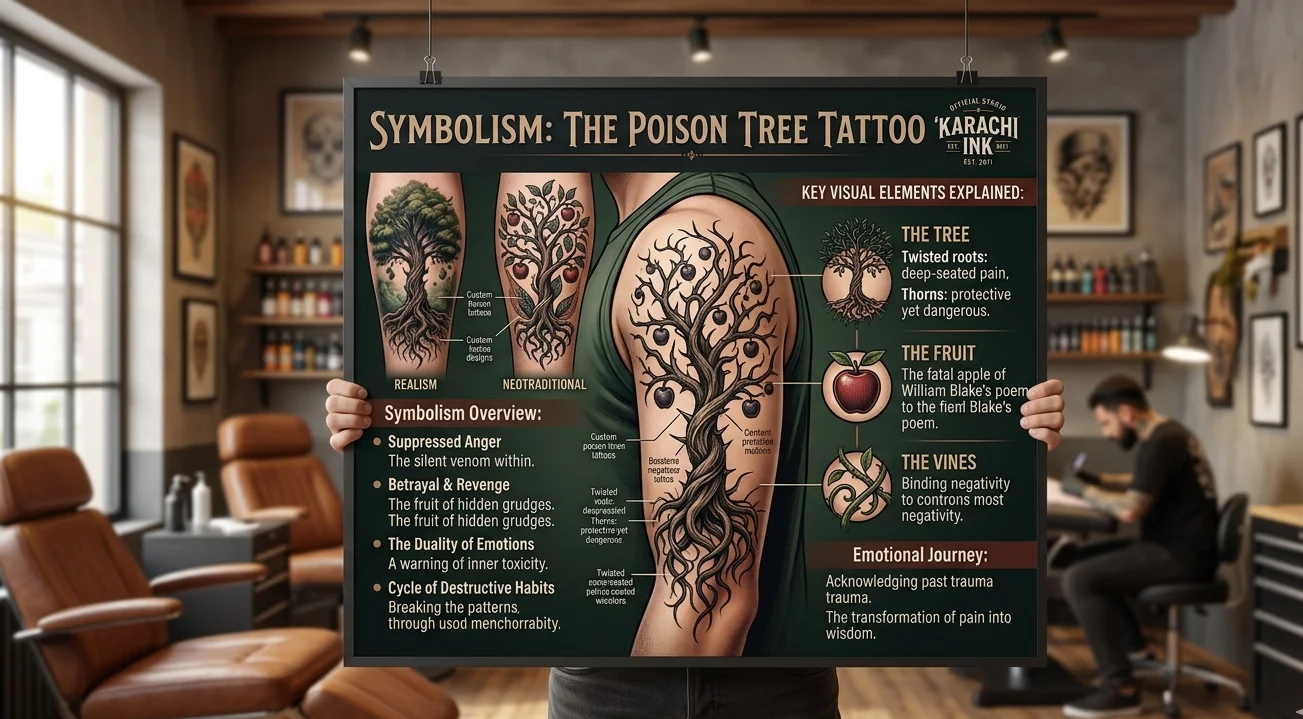
The poison tree tattoo meaning centers on a famous poem by William Blake called “A Poison Tree.” This design represents what happens when you hide your anger instead of speaking it out loud. The tree grows from a seed of resentment. It bears a poisonous apple that destroys the person you secretly hate. People who choose this tattoo want to remember that buried rage never disappears. It grows into something dangerous.
Unlike happy floral tattoos, this one carries a warning. The poison tree tattoo meaning reminds you that unspoken conflict hurts everyone involved. Many wear it as a shield against repeating past mistakes. Others use it to honor a time when they finally confronted a toxic relationship. The image holds both darkness and hope.
The William Blake Poem Behind the Design
William Blake published “A Poison Tree” in 1794 as part of his Songs of Experience collection. The poem tells a simple story. The speaker tells a friend about his anger, and the friend goes away. The problem dissolves. But when the same anger rises against an enemy, the speaker stays silent. He feeds that anger with fears and tears. It grows into a tree with a bright apple.
The enemy sees the apple and sneaks into the garden at night to take it. The next morning, the speaker finds the enemy dead beneath the tree. Blake never explains who dies. That mystery makes the poison tree tattoo meaning so flexible. You decide what the dead enemy represents. It could be your old self, a bad habit, or a person who hurt you.
Symbolism of Suppressed Anger
Suppressed anger acts like water on a seed. The more you push it down, the faster it grows. The poison tree tattoo meaning captures this exact process. Your skin shows a tree with thick roots that grip the earth. Each root stands for a lie you told yourself. “I’m fine.” “It doesn’t matter.” “Forget it.”
The trunk represents years of swallowing insults. The branches spread wide, reaching into every part of your life. Small leaves hide the fruit. That fruit is your revenge fantasy. You may never act on it, but the thought lives inside you. This tattoo forces you to admit that truth. It says, “I carry anger, and I choose to see it rather than hide it.”
Revenge and the Poison Apple
The poison apple in Blake’s poem looks sweet. The enemy wants it. That desire leads to death. In tattoo art, the apple often glows red or gold. Some artists add a single drop of venom falling from the skin. The poison tree tattoo meaning links this apple to karma or poetic justice. You do not need to strike back at someone who wronged you. Your silence already grew a weapon.
But here is the twist. The apple kills the person who eats it. In many interpretations, the speaker of the poem also dies inside. He becomes someone who cultivates hatred instead of peace. So the poison tree tattoo meaning carries a double edge. It warns against revenge while honoring the feeling of wanting it. You wear both truths on your arm or back.
Emotional Transformation Through Dark Art
Dark tattoos often scare people. A poison tree looks gothic, lonely, and sharp. Yet the poison tree tattoo meaning offers a path to emotional growth. You start by admitting you feel rage. That admission already weakens the tree. Naming the anger stops it from growing in secret.
Many people get this tattoo after therapy or a major breakup. They want to mark the moment they chose honesty over silence. The tree remains on their skin, but now it symbolizes a past version of themselves. They water it no longer. This transformation turns a dark image into a badge of survival. You faced your poison tree and walked away alive.
Popular Design Elements and Variations
Artists create poison tree tattoos in many styles. Each element changes the poison tree tattoo meaning slightly.
- Bare branches with no leaves – Represents total emotional exhaustion. You have nothing left to hide.
- A single glowing apple – Focuses on temptation and the moment of choice.
- Snakes wrapped around the trunk – Adds betrayal and hidden danger from trusted people.
- Cracked or splitting bark – Shows that suppressed anger damages you from inside.
- A moon behind the tree – Connects to secrets, night time, and unconscious feelings.
- Fallen apples on the ground – Suggests past revenge attempts that hurt you more than the enemy.
Black and grey designs emphasize the tree’s lonely shape. Color versions use deep greens for leaves and bright red for the apple. Some people add a small grave at the base to show something died there.
Placement Ideas for Poison Tree Tattoos
Placement changes how others see your tattoo and how you interact with it daily.
Forearm – You see the poison tree tattoo meaning every time you type or cook. This placement keeps emotional honesty front and center.
Ribs or side – A hidden spot for a private reminder. Only you and close partners know it exists.
Back or shoulder blade – Allows a large, detailed tree with spreading branches. The poison tree tattoo meaning becomes a burden you carry, just like the poem describes.
Thigh – Easy to cover for work but visible in swimwear. Many people start here for their first dark literary tattoo.
Chest – Places the tree near your heart. This emphasizes that anger lives close to love and fear.
Avoid hands or neck for this design unless you want strangers to ask difficult questions daily.
Who Should Get This Tattoo?
Not everyone needs a poison tree on their body. This tattoo fits specific personalities and life situations.
- People who struggle to express anger – The tattoo becomes a conversation starter about your emotional habits.
- Fans of William Blake or Romantic poetry – You appreciate literary tattoos with layered meanings.
- Survivors of abusive relationships – The tree represents what grew while you stayed silent. Getting the tattoo marks your escape.
- Writers and artists – You understand that dark feelings fuel creative work. The poison tree tattoo meaning honors that process.
- Anyone who has forgiven but not forgotten – The tree stays as a monument to a real wound, even after healing begins.
Teenagers should wait a few years before choosing this design. The meaning deepens with lived experience. A twenty-year-old who gets this tattoo may feel very differently at thirty.
Combining with Other Symbols
The poison tree tattoo meaning shifts when you add other images. These combinations create unique personal statements.
A key hanging from a branch – You hold the solution to your own anger. Unlocking the cage is your choice.
A person sleeping under the tree – Represents the enemy who never knew they hurt you. They rest peacefully while you suffer.
Broken chains around the trunk – Shows that you broke free from a cycle of resentment.
A single tear falling from an apple – Adds regret for the revenge you almost took.
Birds flying away from the branches – Your anger no longer traps you. The birds carry it elsewhere.
Avoid adding flowers unless they are wilted or dead. Fresh blooms contradict the poison tree tattoo meaning. They send a mixed message about growth and decay.
Color vs Black and Grey
Black and grey poison tree tattoos look classic and literary. They resemble old book illustrations. This style emphasizes shadows, bark texture, and the lonely shape of bare branches. The poison tree tattoo meaning becomes more about solitude and internal struggle.
Color tattoos use deep greens, browns, and a bright red or golden apple. The apple draws the eye. Color makes the revenge element obvious. People will notice the fruit first. If you want to highlight the temptation aspect, choose color.
Some artists use watercolor splashes behind the tree. Purple or blue washes suggest emotional chaos. Orange splashes hint at fire and destruction. Talk to your artist about which palette matches your personal story.
Cultural and Literary References
Beyond William Blake, the poison tree tattoo meaning connects to other stories. The biblical Tree of Knowledge of Good and Evil also bears forbidden fruit. Eating it brings death and exile. Many people blend these two symbols. Their tattoo shows a tree with both an apple and a serpent.
In Norse mythology, the tree Yggdrasil holds nine worlds but also has a serpent gnawing its roots. That serpent represents decay and destruction from within. The poison tree tattoo meaning borrows this idea of slow collapse.
Modern horror stories like The Ruins feature plants that hunt and kill. Some tattoo enthusiasts pull from these sources too. They want a tree that feels actively dangerous, not just symbolic. Always tell your artist which references matter to you.
Aftercare and Longevity
A poison tree tattoo needs standard aftercare, but the fine lines and small details require extra attention.
Keep the tattoo covered for the first 24 hours. Wash gently with unscented soap twice a day. Apply a thin layer of tattoo balm. Do not scratch when the skin peels. Scratching removes ink from tiny branch lines.
Sunlight fades black ink faster than color. Use high SPF sunscreen on your poison tree tattoo meaning every time you go outside. Reapply every two hours. Without protection, the apple will look like a brown spot within five years.
Touch-ups happen every three to five years for detailed tree bark and small fruit. Find an artist who specializes in botanical or gothic work. They know how to refresh the poison tree tattoo meaning without making lines thicker than intended.
6 Frequently Asked Questions
Q1: Does the poison tree tattoo meaning always involve revenge?
No. While revenge is central to Blake’s poem, many people reinterpret the meaning. They see the tree as a symbol of unspoken pain or emotional labor. The enemy in the poem can be depression, addiction, or a past version of yourself. Revenge becomes secondary to survival.
Q2: Is this tattoo considered bad luck or evil?
Some religious communities view any tree with poisonous fruit as unlucky. But most tattoo culture sees the poison tree tattoo meaning as psychologically honest, not evil. It acknowledges human darkness without celebrating it. No reliable evidence shows owners experiencing bad luck.
Q3: Can I get this tattoo if I have forgiven the person who hurt me?
Yes. Forgiveness does not erase history. The tattoo honors what you survived. You can look at the tree and feel gratitude that you no longer live under its shadow. Many people get this design years after forgiving someone as a way to close the chapter permanently.
Q4: What is the average cost of a poison tree tattoo?
Size and detail determine price. A small forearm tree with an apple costs $150 to $300. A large back piece with multiple elements runs $800 to $2000. Always pay for quality. Cheap tattoos blur over time, and the poison tree tattoo meaning gets lost in muddy lines.
Q5: How do I explain this tattoo to children or employers?
You do not owe anyone a full explanation. A simple answer works: “It’s from a poem about feelings.” For employers, wear long sleeves if your workplace bans visible tattoos. The poison tree tattoo meaning is personal. You decide who hears the real story.
Q6: Which tattoo styles work best for the poison tree design?
Woodcut or etching style matches Blake’s original illustrations perfectly. Neo-traditional adds bold lines and rich colors. Fine line blackwork creates an elegant, minimalist tree. Avoid watercolor for the trunk because the shape needs structure. Save watercolor for the background sky.
Conclusion
The poison tree tattoo meaning gives you a way to wear your hidden anger openly. It does not glorify revenge. It warns against secrecy while honoring the very real feelings that grow in dark soil. William Blake wrote his poem more than two hundred years ago, but every person who hides their frustration today lives inside his story. You can choose to keep watering that tree. Or you can tattoo it on your skin as a confession, a memorial, and a promise to speak sooner next time.
Look at your own life. Where have you stayed silent to keep peace? What apple are you growing right now? A poison tree tattoo does not solve those problems. But it asks you the question every morning. That question alone can save you years of quiet suffering. Book a consultation with a literary tattoo artist this week. Bring a copy of Blake’s poem. Let the tree grow where you can see it.