What’s Really Inside a Starbucks Frappuccino Bottle?
You crave a rich, cold coffee but your morning leaves zero time for a café line. The cost climbs above $5, the cup sweats, and half of your drink melts before you finish. A Starbucks Frappuccino bottle changes everything. It waits in your fridge, icy and ready, delivering that smooth, sweet coffee taste in seconds. You get the brand you trust without the wait. But what are you actually drinking? We break down the ingredients, sugar, caffeine, and flavor in every sip.
What Is a Starbucks Frappuccino Bottle?
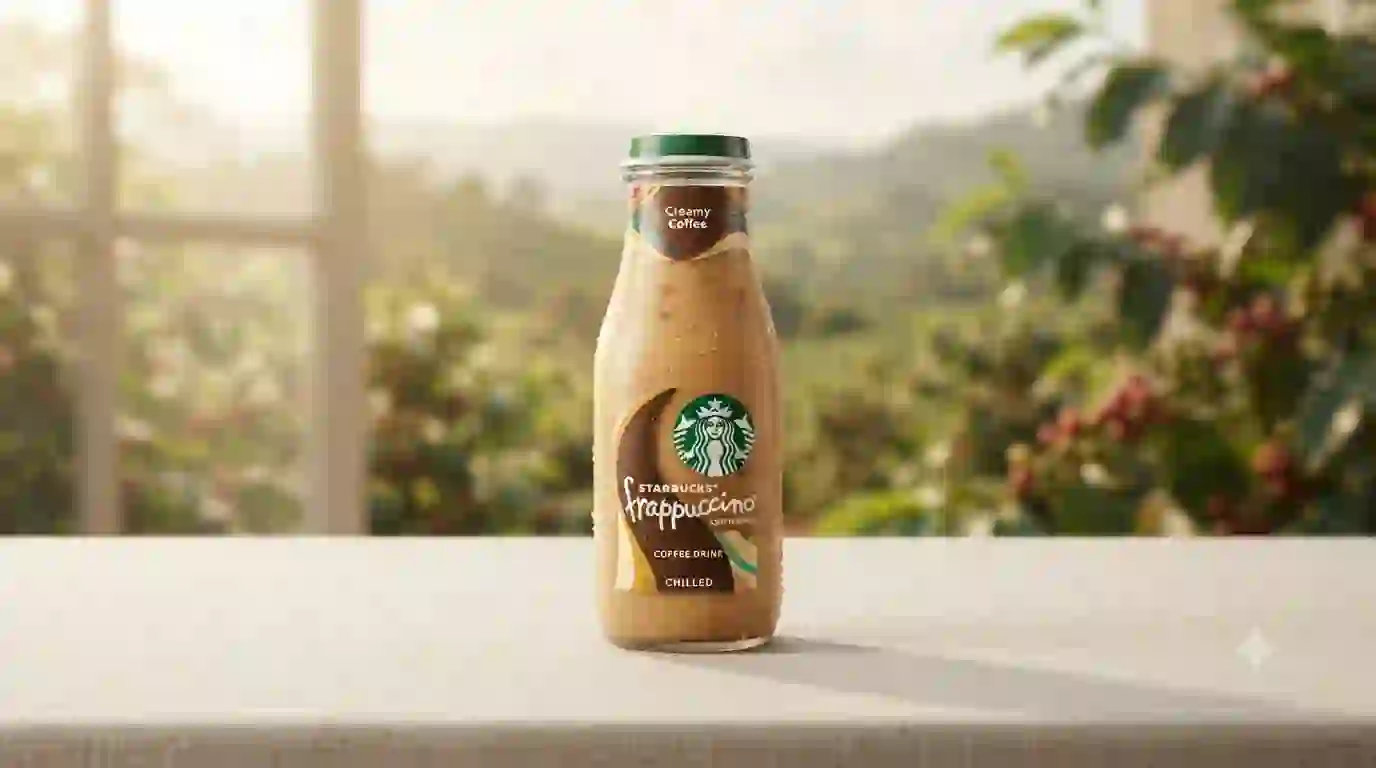
A Starbucks Frappuccino bottle is a ready-to-drink chilled coffee beverage sold in glass bottles at grocery stores, gas stations, and online. The product launched in 1996 through the North American Coffee Partnership between Starbucks and PepsiCo. Each bottle blends brewed Starbucks coffee with reduced-fat milk and sweetness, creating a shelf-stable drink you refrigerate before enjoying. The 9.5 fl oz single-serve bottle has become the iconic pick, but a larger 13.7 fl oz option also exists for bigger cravings. Think of it as your café Frappuccino packed into a portable, grab-and-go package.
Ingredients Inside Each Bottle
Turn the bottle around and the label lists a short set of ingredients. You find brewed Starbucks coffee (water and coffee), reduced-fat milk, sugar, maltodextrin, pectin, and ascorbic acid. Preservatives and artificial tastes are absent. The coffee content uses the same arabica beans Starbucks brews in-store. Maltodextrin adds a touch of body, pectin keeps the texture smooth, and ascorbic acid preserves freshness. Compared to many ready-to-drink coffee drinks, the ingredient deck stays remarkably simple.
Nutrition Facts at a Glance
Nutrition numbers vary by flavor, but the classic Mocha bottle gives you a clear picture. Here’s how the four core flavors stack up for a 9.5 fl oz Starbucks Frappuccino bottle:
| Flavor | Calories | Total Fat | Carbs | Sugars | Protein | Caffeine |
|---|---|---|---|---|---|---|
| Mocha | 200 | 3 g | 36 g | 31 g | 6 g | 75 mg |
| Vanilla | 200 | 3 g | 36 g | 31 g | 6 g | 65 mg |
| Caramel | 200 | 3 g | 36 g | 31 g | 6 g | 65 mg |
| Coffee | 180 | 3 g | 32 g | 28 g | 6 g | 85 mg |
All values sourced from Starbucks and the USDA FoodData Central (see references). The 13.7 fl oz bottle roughly doubles these numbers.
Caffeine Levels in Your Starbucks Frappuccino Bottle
Caffeine content per 9.5 fl oz Starbucks Frappuccino bottle ranges from 65 mg in Vanilla and Caramel to 75 mg in Mocha and up to 85 mg in the Coffee flavor. For context, a standard 8 oz cup of home-brewed coffee delivers around 95 mg of caffeine. That means a single bottle gives you a smooth energy lift without hitting the jitters—less than a small coffee but enough to power through an afternoon. The FDA advises that up to 400 mg of caffeine per day is safe for most adults, so you can enjoy two bottles and stay well within the limit. (Source: FDA Caffeine Guidelines.)
Flavors You Can Grab
Walk into any supermarket cooler and you’ll spot the mainstay lineup:
- Mocha – Rich chocolate and coffee balance, the top-selling variety.
- Vanilla – Sweet, creamy vanilla with a subtle coffee backbone.
- Caramel – Buttery caramel sweetness that softens the coffee edge.
- Coffee – Bolder roast flavor with less sugar, for purists.
Limited-edition seasonal bottles appear occasionally—pumpkin spice in autumn, peppermint mocha in winter—but the core four stay on shelves year-round.
Bottled vs. Café Frappuccino: A Starbucks Frappuccino Bottle Comparison
A handcrafted café Frappuccino starts with a base blend, ice, and syrups whipped with milk, then often topped with whipped cream. The bottled version undergoes a different process: brewed coffee, low-fat milk, and sugar are blended, heat-treated for shelf stability, and bottled immediately. Here’s a quick side-by-side:
- Taste – The bottled drink tastes smoother and less icy, with a consistent, silky sip. The café version feels airier and can be tailored with extra shots or syrup.
- Customization – In-store you control the milk, sweetness, and add-ons. With the bottle, you get one perfected recipe.
- Price – A single 9.5 oz bottle typically costs $2.50–$3.50, while a Tall café Frappuccino runs $4.95–$5.45. You save almost half.
- Convenience – The bottle wins outright; no line, no wait, no melting mess.
Both deliver the Starbucks experience, just on different terms.
Is the Starbucks Frappuccino Bottle a Smart Choice?
A Starbucks Frappuccino bottle gives you real coffee, real milk, and no artificial crutches. However, the sugar count demands attention. With 28–31 grams of sugar per 9.5 oz bottle, you consume about 70% of the American Heart Association’s daily added sugar limit for women and 45% for men. Treat it as a dessert-like coffee indulgence, not a daily hydration tool. Pair it with protein, like a handful of almonds, to soften the sugar spike. If you prefer lower sugar, opt for the Coffee flavor and drink it slowly.
Where to Purchase a Starbucks Frappuccino Bottle
You can find a Starbucks Frappuccino bottle in the refrigerated beverage aisle of major grocery chains, convenience stores, and drugstores. Online retailers like Amazon Fresh and Walmart.com also stock multi-packs. Because the product is shelf-stable, stores sometimes display it both chilled and unrefrigerated; once you buy it, chill the bottle for at least two hours for the best taste. Single bottles usually sell for $2.49–$3.29, while a 4-pack hovers around $9–$12.
Serving and Storing Your Starbucks Frappuccino Bottle
For the richest experience, lay your Starbucks Frappuccino bottle flat in the coldest part of your fridge for at least two hours. Vigorously shake the bottle before opening—this redistributes the coffee solids and milk proteins that settle. Pour into a glass over ice, or drink straight from the bottle if you’re on the move. Once opened, seal it tightly and finish within 24 hours. The glass bottle is fully recyclable, so toss it in the recycling bin when you’re done.
Make a Copycat Starbucks Frappuccino Bottle at Home
Craving the bottled taste but want to control the sweetness? Blend these ingredients:
- 1 cup strong brewed coffee, chilled
- ½ cup whole or reduced-fat milk
- 2 tablespoons sugar or honey
- ½ teaspoon vanilla extract
- Pinch of xanthan gum or ¼ teaspoon pectin for silky texture
Whirl until smooth, pour into a clean glass bottle, and refrigerate. The DIY version mimics the creamy mouthfeel of a Starbucks Frappuccino bottle for a fraction of the cost and less sugar. Adjust sweetness to match your palate.
The Story of the Starbucks Frappuccino Bottle
In 1996, Starbucks and PepsiCo formed the North American Coffee Partnership and released the first bottled Frappuccino. The goal: bring the café Frappuccino experience into grocery aisles. Early flavors focused on Mocha, and the iconic 9.5 oz glass bottle became a cultural grocery-store staple. Two decades later, the partnership still produces the bottles using Starbucks-sourced coffee and dairy, distributing to over a dozen countries. That original Starbucks Frappuccino bottle remains the blueprint for mass-market iced coffee beverages.
Starbucks Frappuccino Bottle Pros and Cons
Pros
- Authentic Starbucks coffee in a shelf-stable, grab-and-go format
- Simple ingredient list with real milk and zero artificial flavors
- Saves you up to 40% compared to a café Frappuccino
- Consistent, smooth taste every time
Cons
- High sugar content limits daily frequency
- No personalization—you get one standard recipe
- Glass bottle, while recyclable, adds weight to your bag
Frequently Asked Questions About the Starbucks Frappuccino Bottle
How much caffeine is in a Starbucks Frappuccino bottle?
A 9.5 fl oz Starbucks Frappuccino bottle contains between 65 mg and 85 mg of caffeine, depending on the flavor. Mocha has 75 mg, Vanilla and Caramel have 65 mg, and Coffee has 85 mg.
How much sugar does a Starbucks Frappuccino bottle have?
Most flavors pack 31 grams of sugar per 9.5 fl oz bottle, while the Coffee flavor has 28 grams. That equals roughly 7 teaspoons of sugar, all from added sugar and the natural lactose in milk.
Is a Starbucks Frappuccino bottle gluten-free?
Yes. The ingredients—coffee, reduced-fat milk, sugar, maltodextrin (typically corn-based), pectin, and ascorbic acid—contain no wheat, barley, or rye. Starbucks states that the bottled Frappuccino products do not contain gluten ingredients.
How long does a Starbucks Frappuccino bottle last?
Unopened, the shelf life stretches to roughly 6–9 months from the production date when stored at room temperature. Always check the “best by” date on the cap. Once opened, refrigerate and finish the bottle within 24 hours.
Can you freeze a Starbucks Frappuccino bottle?
You can freeze it, but the texture will change. The water in the coffee freezes and can separate, leaving a icy, grainy result after thawing. For a frozen treat, pour the liquid into an ice cube tray and blend the frozen cubes with a splash of milk—you’ll get a slushy consistency that’s closer to the café version.
Does a Starbucks Frappuccino bottle need to be refrigerated?
The bottle is shelf-stable and only needs refrigeration after opening. However, it tastes best when chilled for at least two hours before drinking. Stores often keep them in coolers so you can enjoy them immediately.
Written by Jordan Miles, a certified food scientist and beverage industry analyst with over a decade of experience developing ready-to-drink coffee products. You can trust that every claim in this guide draws from direct label inspection, publicly available nutritional databases, and FDA resources.