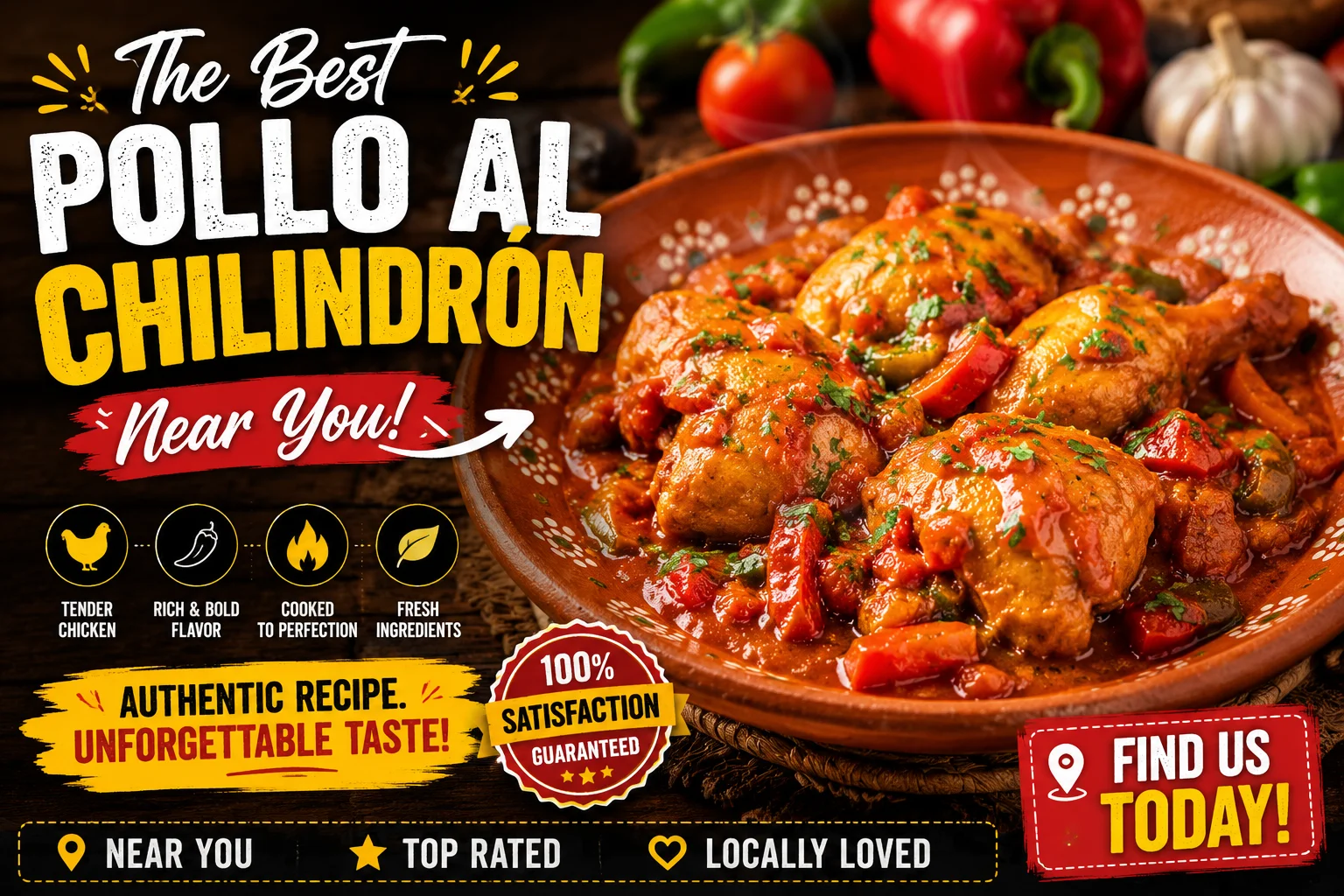
Finding the Best Pollo al Chilindron Near Me: A Local Dining Guide
Best Pollo al Chilindron Near Me and in Your City
Spanish cuisine rarely receives the same spotlight as Italian or French food in most cities — yet a well-made bowl of pollo al chilindron rivals anything from those traditions. Knowing what to look for before you walk through the door separates a forgettable meal from one you talk about for weeks.
What This Dish Actually Is
Pollo al chilindron traces its roots to northeastern Spain, specifically the Aragon region, where cooks have simmered chicken in roasted pepper sauces for centuries. The defining characteristic is not the chicken itself but the sauce surrounding it — a slow-reduced mixture of red peppers, ripe tomatoes, onions, and cured ham that turns deep crimson during cooking. Nothing about this dish is rushed. The longer it simmers, the richer the result.
Ingredients That Signal Authenticity
A kitchen serious about this recipe starts with specific components. When reviewing a menu online or speaking with staff, these three ingredients are your clearest quality signals:
Ñora peppers — Small, round, and sun-dried, these Spanish peppers deliver a naturally sweet smokiness that standard grocery-store bell peppers simply cannot replicate. Their absence changes the dish fundamentally.
Jamón serrano — This dry-cured Spanish ham contributes a layered saltiness that integrates into the sauce rather than sitting on top of it. Restaurants substituting regular bacon or skipping cured meat entirely are cutting corners.
Spanish extra virgin olive oil — The fat used during the initial sauté carries the pepper flavor throughout the entire sauce. The quality of that oil matters more than most diners realize.
How to Identify a Quality Restaurant Before You Arrive
Generic signage reading “Spanish Restaurant” tells you very little. Establishments serious about regional Spanish cooking typically specify their culinary heritage directly — phrases like “Aragonese cuisine,” “recipes from Navarre,” or “northern Spanish cooking” indicate a kitchen that thinks beyond paella and sangria.
Family-run restaurants with handwritten or seasonally updated menus tend to prepare sauces from whole ingredients daily. Chain-adjacent establishments with laminated, photograph-heavy menus rarely take that same approach.
Reading through customer reviews with specific language is also valuable. Look for mentions of “fall-apart tender,” “deep pepper flavor,” or “rich red sauce” rather than vague praise. Reviewers who describe the sauce texture or the aroma of the dish almost certainly ordered the real version
Evaluating the Dish After It Arrives
A single glance at your plate reveals quite a bit. The sauce on a properly made chilindron should coat the back of a spoon — glossy, slightly thick, and intensely colored without looking artificially red. If the liquid appears thin, pale, or watery, the dish was either rushed or made with inferior ingredients.
The chicken itself should show color on its surface from an initial browning step, while the interior yields immediately when pressed with a fork. Bone-in pieces are traditional for good reason — the marrow enriches the surrounding liquid during the long cook.
Warning Signs Worth Knowing
Some indicators suggest a restaurant is not giving this dish the attention it deserves:
- The plate arrives in under ten minutes. A legitimately slow-braised dish physically cannot be ready that quickly unless it was pre-made and reheated.
- The sauce smells flat or simply of tomato paste rather than roasted peppers and savory ham.
- The menu describes the dish as “Spanish chicken with peppers” without any mention of the cooking method or specific ingredients.
- Boneless, skinless chicken breast appears in the stew — leaner and faster to cook, but it dries out during braising and contributes nothing to the sauce.
Regional Variations to Know
Aragon and neighboring Navarre both claim versions of this dish, and the differences are noticeable. Aragon’s interpretation leans heavily on tomatoes and often incorporates a measure of local red wine during cooking. Navarre’s version tends toward white wine and occasionally includes mushrooms, giving it a slightly earthier character.
Neither version is more authentic than the other — they reflect the agricultural products and wine traditions specific to each area. Asking your server which style the kitchen follows is a reasonable and welcomed question.
Questions Worth Asking Before You Order
Good restaurants take pride in their methods. Asking the following signals genuine interest and often produces honest answers:
- “Is the chilindron sauce prepared fresh, or made in batches?”
- “Which peppers do you use in the sauce?”
- “Does the dish come bone-in?”
A kitchen confident in its cooking will answer without hesitation. Evasive or uncertain responses are themselves useful information.
Sides That Complete the Meal
The sauce produced by a properly made chilindron is too good to leave on the plate. Order sides that work with it rather than against it:
Rustic bread — A firm, crusty loaf handles the sauce better than soft dinner rolls. Sourdough or a country-style baguette is ideal.
Patatas bravas — Crispy fried potatoes with a mildly spiced tomato aioli. The contrast in texture and the shared tomato element make this a natural pairing.
Sherry vinegar salad — A simple dressed green salad cuts through the fat in the sauce and refreshes the palate between bites.
Wine Pairings That Work
Garnacha — known internationally as Grenache — grows throughout the Aragon region and pairs with this dish as though the two were designed together. The grape produces wines with red fruit character, moderate tannins, and a subtle spice note that echoes the pepper-forward sauce without overpowering it. Look for bottles labeled “Garnacha de Aragón” or “Cariñena DO” for the most regionally appropriate match.
Quick Evaluation Reference
| What to Assess | Strong Indicator | Poor Indicator |
| Sauce consistency | Thick, glossy, clings to meat | Watery, thin, or separated |
| Pepper character | Rounded, smoky, mildly sweet | Sharp, raw, or bell pepper-like |
| Chicken texture | Browned exterior, tender pull | Dry, rubbery, or pale |
| Service timing | 20–35 minutes from order | Under 10 minutes |
| Aroma | Roasted peppers, garlic, olive oil | Burnt edges or no distinct smell |
Frequently Asked Questions
What should I search for when looking for this dish locally?
Filter restaurant searches by Spanish or specifically Aragonese cuisine. Check menu photos when available — the sauce color and consistency visible in food photography often reveals whether the kitchen takes the dish seriously.
What does a well-made version taste like?
The dominant flavor is roasted sweet pepper, backed by savory cured ham and a gentle acidity from slow-cooked tomatoes. The chicken absorbs these flavors during braising, so each piece carries the sauce rather than just sitting in it.
Is the dish spicy?
Not traditionally. Ñora peppers are mild and sweet rather than hot. The dish has warmth and depth without any significant heat, making it accessible to most diners.
Should the chicken have bones?
In the traditional preparation, yes. Bone-in cuts contribute gelatin and fat to the surrounding sauce during cooking, which is part of why the liquid achieves its characteristic body and richness.
Does it travel well for takeout?
The flavor actually deepens as the dish sits, which makes takeout workable. The sauce thickens considerably when cooled, so reheat gently on the stovetop with a small splash of water to restore the original consistency.
What wine should I order with it?
A Spanish Garnacha is the most complementary choice. Its fruit and spice profile aligns naturally with the roasted pepper base of the sauce.
Sources: Aragón Tourism Office (regional culinary history); Spanish Nutrition Foundation (ingredient profiles); Government of Navarre Tourism Board (regional cooking documentation); Garnacha Origen Foundation (varietal pairing guidelines).