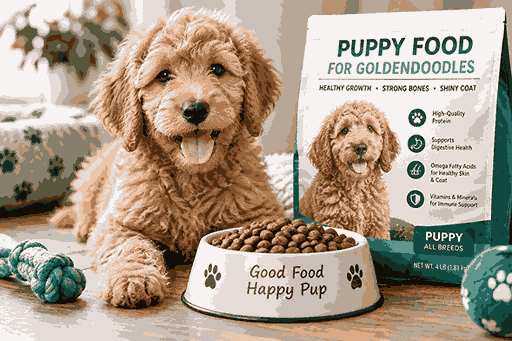
Best Goldendoodle Puppy Food: The Complete Feeding Guide Every Owner Needs
Your goldendoodle puppy grows fast, and picking the wrong diet causes joint problems, dull coats, and chronic digestive upset. Most new owners guess their way through feeding, risking health issues that rack up thousands in vet bills. This guide shows you exactly what goldendoodle puppy food your pup needs at every stage for strong bones, a glossy coat, and unstoppable energy.
What Is the Best Goldendoodle Puppy Food for Healthy Growth?
The best goldendoodle puppy food combines high-quality animal protein, balanced fats, and controlled calcium levels tailored for medium-to-large breed growth. Goldendoodles inherit their size from both Golden Retriever and Poodle parents, which means their bones and joints need careful nutritional support during the first 12 to 18 months.
Look for formulas that list a named meat source — chicken, lamb, or salmon — as the first ingredient. The Association of American Feed Control Officials (AAFCO) sets the nutritional standards that reputable brands follow, so always check for an AAFCO statement on the bag (aafco.org).
Puppy formulas designed for large breeds work best because they slow growth rates just enough to protect developing joints. Fast growth in big dogs directly links to hip dysplasia and elbow problems later in life.
How Much Goldendoodle Puppy Food Should You Feed Daily?
Portion sizes depend on your pup’s current weight, age, and activity level. A standard goldendoodle puppy food feeding chart looks like this:
| Puppy Age | Weight Range | Daily Food (Cups) | Meals Per Day |
| 8–12 weeks | 5–15 lbs | 1–1.5 | 4 |
| 3–4 months | 15–25 lbs | 1.5–2.5 | 3 |
| 5–6 months | 25–40 lbs | 2.5–3.5 | 3 |
| 7–9 months | 40–55 lbs | 3–4 | 2–3 |
| 10–12 months | 50–70 lbs | 3.5–4.5 | 2 |
| 12–18 months | 55–75 lbs | 3–4 (adult formula) | 2 |
These numbers serve as starting points. Monitor your puppy’s body condition weekly. You should feel ribs easily without pressing hard, and your pup should have a visible waist when viewed from above.
Overfeeding causes obesity, which stresses growing joints. Underfeeding stunts development. Adjust portions in small increments — about a quarter cup — based on what you see and what your vet recommends.
When Should You Switch Goldendoodle Puppy Food to Adult Formula?
Most Goldendoodles transition to adult food between 12 and 18 months of age. Miniature Goldendoodles (under 30 lbs) mature faster and can switch closer to 12 months. Standard and large Goldendoodles benefit from staying on goldendoodle puppy food until they reach 15 to 18 months.
Make the transition gradual over 7 to 10 days. Mix 25% adult food with 75% puppy food for the first three days. Then move to a 50/50 split, followed by 75% adult and 25% puppy, before going fully adult.
Watch for loose stools or vomiting during the switch. If digestive issues appear, slow the transition down by a few extra days at each stage.
What Nutrients Does Goldendoodle Puppy Food Need to Include?
Your growing Goldendoodle requires a precise blend of macronutrients and micronutrients. Here is what matters most:
- Protein (22–32%): Builds muscle and supports organ development. Animal-based sources like chicken meal, deboned turkey, and fish outperform plant proteins.
- Fat (8–20%): Fuels energy and brain development. DHA from fish oil sharpens cognitive function during the critical first six months.
- Calcium & Phosphorus (1:1 to 1.5:1 ratio): Strengthens bones without accelerating growth too quickly. The FDA warns that excess calcium in large-breed puppies increases skeletal disorder risk (fda.gov).
- Omega-3 & Omega-6 Fatty Acids: Produce the soft, wavy coat Goldendoodles are known for. Flaxseed and salmon oil are excellent sources.
- Glucosamine & Chondroitin: Support joint cartilage, especially important given the Golden Retriever lineage’s predisposition to hip dysplasia.
- Fiber (3–5%): Keeps digestion smooth. Pumpkin, sweet potato, and chicory root work well.
Every bag of quality goldendoodle puppy food should display a guaranteed analysis listing these percentages clearly.
Is Grain-Free Goldendoodle Puppy Food Safe for Your Pup?
This question sparks heated debate among veterinarians. The FDA launched an investigation into a potential link between grain-free diets and dilated cardiomyopathy (DCM) in dogs after receiving reports of heart disease in breeds not typically prone to it (fda.gov).
Grain-free formulas often replace rice or oats with peas, lentils, and potatoes. These legume-heavy substitutions may interfere with taurine absorption, a critical amino acid for heart health.
Unless your Goldendoodle has a confirmed grain allergy — which is rare — a grain-inclusive formula remains the safer choice. True food allergies in dogs more commonly involve proteins like beef or chicken, not grains.
If your vet diagnoses a grain sensitivity, choose a grain-free option that includes added taurine and has undergone feeding trials.
What Are the Top Goldendoodle Puppy Food Brands in 2025?
Not all kibble earns a spot on this list. These brands consistently meet AAFCO nutrient profiles, use named meat sources, and undergo rigorous quality testing:
- Royal Canin Golden Retriever Puppy: Formulated for the Golden Retriever side of your pup’s genetics. Supports coat health and joint development with EPA and DHA.
- Hill’s Science Diet Large Breed Puppy: Clinically tested antioxidant blend. Controlled mineral levels protect growing bones.
- Purina Pro Plan Large Breed Puppy: High-protein formula with live probiotics for digestive support. Widely recommended by breeders.
- Blue Buffalo Life Protection Large Breed Puppy: Real deboned chicken as the first ingredient. Includes their proprietary LifeSource Bits for immune support.
- Orijen Puppy Large: Biologically appropriate, 85% animal ingredients. Higher price point but exceptional ingredient quality.
Always match the formula to your Goldendoodle’s expected adult size. A mini Goldendoodle needs a small-breed puppy formula, while a standard Goldendoodle needs large-breed nutrition.
How Do You Read Goldendoodle Puppy Food Labels Correctly?
Pet food labels trick unprepared buyers. The ingredient list follows a weight-based order, meaning the first item weighs the most before processing.
Here is what to look for:
- First ingredient: A named animal protein (chicken, salmon, lamb). Avoid vague terms like “meat by-products.”
- Named fat sources: “Chicken fat” or “salmon oil” beats “animal fat.”
- No artificial preservatives: Skip BHA, BHT, and ethoxyquin. Natural preservatives like mixed tocopherols (vitamin E) are safer.
- AAFCO statement: Confirms the food meets minimum nutritional requirements for growth.
- Guaranteed analysis: Shows minimum protein and fat percentages plus maximum fiber and moisture.
A quality goldendoodle puppy food label reads like a recipe you recognize, not a chemistry textbook.
Can You Mix Wet and Dry Goldendoodle Puppy Food Together?
Yes, combining wet and dry food offers real benefits. Wet food increases moisture intake, which supports kidney function and keeps picky eaters interested in their bowl.
Start with a ratio of 75% dry kibble to 25% wet food. Adjust based on your puppy’s preference and caloric needs. Remember that wet food contains more calories per cup than dry, so reduce the kibble portion accordingly.
Mixing textures also helps during teething. Softened kibble feels gentler on sore gums between 4 and 6 months of age.
Just keep total daily calories in check. Use the feeding guidelines on both cans and bags, then calculate the combined amount.
What Foods Should You Never Feed a Goldendoodle Puppy?
Certain human foods pose serious toxicity risks to Goldendoodle puppies. Keep these far away from your pup’s reach:
- Chocolate: Contains theobromine, which causes seizures and heart failure.
- Grapes and raisins: Trigger acute kidney failure, even in small amounts.
- Xylitol: This artificial sweetener appears in sugar-free gum and peanut butter. It causes rapid insulin release and liver failure.
- Onions and garlic: Destroy red blood cells, leading to anemia.
- Macadamia nuts: Cause weakness, vomiting, and hyperthermia.
- Cooked bones: Splinter easily and puncture the digestive tract.
The American Kennel Club maintains a full list of toxic foods every dog owner should bookmark (akc.org).
How Does Goldendoodle Puppy Food Affect Coat Health?
That signature fluffy Goldendoodle coat starts in the food bowl. The Poodle genes give your pup a low-shedding, curly or wavy coat that demands specific fatty acid support.
Omega-3 fatty acids from fish oil reduce skin inflammation and produce a soft, glossy texture. Omega-6 fatty acids from chicken fat or sunflower oil strengthen the skin barrier and prevent dryness.
A dull, brittle, or flaky coat often signals a nutritional deficiency. Before switching shampoos or supplements, evaluate your goldendoodle puppy food first. Upgrading to a formula with higher omega content frequently resolves coat issues within 6 to 8 weeks.
Biotin and zinc also play supporting roles. Quality puppy formulas include these micronutrients in bioavailable forms.
What Is the Ideal Goldendoodle Puppy Food Schedule by Age?
Consistency matters more than perfection. Puppies thrive on predictable routines that regulate digestion and energy levels.
8 to 12 weeks: Feed four small meals spaced evenly throughout the day — roughly 7 AM, 11 AM, 3 PM, and 7 PM. Their tiny stomachs cannot hold large portions.
3 to 6 months: Drop to three meals daily. Morning, midday, and early evening works well. This stage brings rapid growth spurts, so monitor weight weekly.
6 to 12 months: Transition to two meals per day. Morning and evening feedings align with your schedule and maintain steady blood sugar.
12 to 18 months: Maintain two meals daily as you gradually shift to adult formula. Keep feeding times consistent to support digestive regularity.
Always provide fresh water alongside every meal. Goldendoodle puppies drink more than you expect, especially after play sessions.
Frequently Asked Questions About Goldendoodle Puppy Food
How many times a day should I feed my goldendoodle puppy?
Feed 8-to-12-week-old puppies four times daily. Reduce to three meals from 3 to 6 months, then two meals from 6 months onward. Consistent timing supports digestion and house-training progress.
Can goldendoodle puppies eat human food?
Small amounts of plain cooked chicken, carrots, blueberries, and pumpkin are safe. Avoid seasoned, salty, or processed foods. Never give chocolate, grapes, onions, or anything containing xylitol.
What is the best goldendoodle puppy food for sensitive stomachs?
Choose a limited-ingredient formula with a single novel protein like salmon or duck. Look for easily digestible carbohydrates such as sweet potato or rice. Adding a probiotic supplement can also help settle an upset gut.
When do I stop feeding goldendoodle puppy food?
Mini Goldendoodles can transition at 12 months. Standard and large Goldendoodles should stay on puppy formula until 15 to 18 months. Consult your vet to confirm your pup has reached skeletal maturity.
Is raw food safe for goldendoodle puppies?
Raw diets carry bacterial contamination risks — Salmonella and E. coli — that affect both puppies and humans. The AVMA discourages raw feeding for young dogs with developing immune systems. If you choose raw, work closely with a veterinary nutritionist to ensure complete nutrition.
How do I know if my goldendoodle puppy food is working?
Look for firm stools, steady weight gain, a shiny coat, bright eyes, and high energy levels. If your puppy experiences chronic diarrhea, excessive itching, or stunted growth, the current diet likely needs adjustment. Schedule a vet visit for a full nutritional assessment.