Polish Food: 10 Traditional Dishes You Must Try in 2026
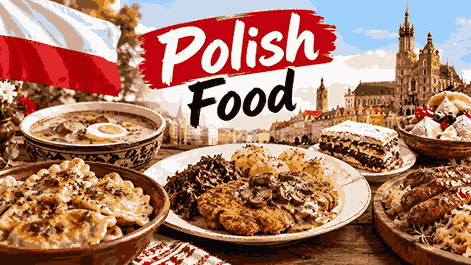
Polish food ranks among Europe’s most satisfying cuisines. In the 24/25 TasteAtlas Awards, Polish cuisine placed 11th worldwide out of 100 . This guide covers the essential dishes every food lover should know. You’ll learn what makes each one special, when to eat it, and where to find the best versions.
What Makes Polish Food Unique?
Polish food reflects centuries of history, geography, and cultural exchange. Three elements define the cuisine: hearty ingredients, seasonal cooking, and deep-rooted tradition.
The cuisine relies on simple staples: potatoes, cabbage, grains, mushrooms, and pork. These humble ingredients transform into deeply satisfying meals through techniques like fermenting, braising, and slow cooking.
Polish hospitality shapes how food is served. Chef Gałązka explains that Polish table culture centers on respect and abundance . A Polish home will always welcome and feed its guests generously. This cultural value means portions are substantial, and meals become gatherings that last for hours.
Geography also plays a role. Poland’s position between Germany and Russia, combined with historical connections to Lithuania, Ukraine, and the Austro-Hungarian Empire, created a cuisine that borrows and adapts. You’ll find German-influenced sausages, Eastern European fermentation traditions, and Middle Eastern spices like marjoram and allspice.
Key Insight: Polish food isn’t about complexity. It’s about doing simple things exceptionally well.
The Essential Polish Food Guide: 10 Dishes You Must Try
1. Pierogi: Poland’s Most Famous Export
Pierogi are stuffed dumplings that exist in virtually every culture with a flour-based cuisine. Poland’s version stands out for its versatility and the quality of its fillings.
Common varieties include:
- Ruskie – potato and farmer’s cheese
- Z kapustą i grzybami – sauerkraut and mushroom
- Z mięsem – meat filling
- Z owocami – sweet fruit versions with blueberries, strawberries, or cherries
You’ll find pierogi boiled, pan-fried, or baked. The cooking method changes the texture dramatically. Boiled pierogi are soft and delicate. Pan-fried versions develop a golden crust that adds contrast.
Where to find them: Every Polish restaurant serves pierogi. For the best experience, look for “pierogarnia” – dedicated pierogi shops that often make them fresh daily .
2. Bigos: The Hunter’s Stew That Improves with Time
Bigos, often translated as hunter’s stew, combines sauerkraut, fresh cabbage, various meats, and a complex spice blend. The dish dates back to the 16th century when sauerkraut became common on Polish tables .
What makes bigos remarkable is its transformation over time. The flavor deepens with each reheating. Many Polish families keep a pot going for days, adding new ingredients as they go. Adam Mickiewicz, Poland’s national poet, immortalized bigos in his epic poem “Pan Tadeusz” .
Traditional ingredients:
- Sauerkraut and fresh cabbage
- Pork, beef, and sometimes game meats
- Dried mushrooms
- Prunes or dried apples for sweetness
- Red wine or beer
- Bay leaves, allspice, marjoram
3. Żurek: The Soup That Defines Polish Holidays
Żurek is a sour rye soup that appears on Easter tables across Poland. The soup’s distinctive tang comes from a fermented rye starter called “zakwas.” Families often prepare this starter days in advance.
The soup typically contains:
- Biała kiełbasa (white sausage)
- Hard-boiled eggs
- Potatoes
- Horseradish
- Garlic and marjoram
Żurek was Google’s most-searched recipe in Poland in 2024 . This search volume reflects its status as a holiday essential. While Easter is the traditional time for żurek, you’ll find it in Polish restaurants year-round.
A regional variation called barszcz biały (white borscht) uses a similar fermented base but with a milder flavor profile .
4. Kotlet Schabowy: The Sunday Dinner Standard
Kotlet schabowy is Poland’s version of a breaded pork cutlet. For decades, this dish has been the centerpiece of Sunday dinners in Polish homes. It symbolizes prosperity and family togetherness .
What makes a good kotlet schabowy:
- Pork loin pounded thin
- Breaded with flour, egg, and breadcrumbs
- Fried in oil until golden and crispy
- Served with mashed potatoes and cabbage salad
The dish has evolved beyond its simple origins. Modern restaurants offer variations with mushroom sauce, roasted versions, and creative sides. Purists argue the classic preparation remains unbeatable.
5. Gołąbki: Cabbage Rolls with History
Gołąbki (pronounced go-WOM-bkee) are cabbage leaves stuffed with a mixture of rice and meat, baked in tomato sauce. The name means “little pigeons,” though the dish contains no pigeon.
The filling traditionally combines:
- Ground pork and beef
- Cooked rice
- Onion
- Seasonings
Some regional versions use buckwheat instead of rice. Others add mushrooms or smoked meat. The cabbage leaves are softened before rolling, then the rolls are baked until tender.
Gołąbki appear at Christmas Eve dinners and family gatherings throughout the year . They freeze well, making them a practical dish for large batches.
6. Barszcz Czerwony: The Beet Soup That Anchors Christmas
Barszcz czerwony (red borscht) is a clear beet soup that serves as the opening course of Wigilia, Poland’s Christmas Eve dinner. The soup gets its deep crimson color from beets, with flavor coming from a fermented beet starter or vegetable stock.
Traditional serving: Barszcz is often served with uszka – small ear-shaped dumplings filled with mushroom or meat . The combination of the tart soup and savory dumplings creates a perfect balance.
Unlike Ukrainian or Russian borscht, Polish barszcz typically contains no cream or milk. This gives it a thinner consistency, more like a consommé .
7. Placki Ziemniaczane: Potato Pancakes Done Right
Potato pancakes, called placki ziemniaczane, represent Polish food at its most humble and satisfying. Grated potatoes are mixed with egg, flour, and onion, then fried until crispy.
The quality depends on technique:
- Potatoes should be grated fresh, not soaked
- Excess moisture must be squeezed out
- The oil must be hot enough to create immediate crispness
Serving variations:
- Savoury – with sour cream or goulash sauce
- Sweet – with sugar and cream (common in some regions)
- With gzik – a regional specialty from Wielkopolska using cottage cheese and chives
8. Kielbasa: Poland’s Sausage Tradition
Polish sausages, collectively called kielbasa, represent one of the country’s most important culinary contributions. The variety is enormous, but several types stand out:
| Type | Description | Best Served |
| Biała kiełbasa | Fresh white sausage with garlic and marjoram | Easter breakfast, żurek |
| Kiełbasa wiejska | Smoked country sausage | Grilled, with bread |
| Kabanosy | Thin, dry smoked sticks | Snacking |
| Kiełbasa jałowcowa | Juniper-flavored sausage | Cold cuts |
Biała kiełbasa holds particular cultural importance. It appears in Easter breakfast spreads alongside eggs, horseradish, and bread . Unlike smoked sausages, it requires cooking before eating.
9. Sernik: Poland’s Cheesecake with Character
Sernik is Poland’s baked cheesecake, made with twaróg (farmer’s cheese) rather than cream cheese. This gives the cake a denser, tangier character than American versions.
The history connects to 17th-century Poland. King Jan III Sobieski reportedly brought a cheesecake recipe back from Vienna after his victory against the Turks . Whether entirely accurate, sernik became a Polish staple.
Popular variations:
- Classic baked – smooth, dense, slightly tangy
- Krakowski style – on a shortbread base
- With chocolate – modern adaptations
- No-bake (na zimno) – lighter, set with gelatin
Sernik appears at Christmas, Easter, and everyday celebrations. It represents the Polish approach to dessert: substantial, not overly sweet, and deeply satisfying.
Pączki: The Doughnuts Worth Celebrating
Pączki are Polish doughnuts, richer and denser than typical jelly doughnuts. The dough contains eggs, butter, sugar, and sometimes a touch of alcohol. They’re fried until deep golden, then filled with rose jam, custard, or other sweet fillings.
Fat Thursday (Tłusty Czwartek) is pączki’s day. On the Thursday before Lent, Poles consume millions of these doughnuts. Bakeries work through the night to meet demand. The tradition developed as a way to use up ingredients forbidden during Lent: sugar, eggs, and fat .
Poles take pronunciation seriously. “Pączki” sounds like “POONCH-kee.” Wisconsin residents reportedly struggle with this word more than any other .
Polish Food by Holiday: What Poles Eat and When
Polish holidays center on specific foods, creating culinary traditions that repeat annually with comforting consistency.
Christmas Eve (Wigilia): Twelve Dishes, No Meat
Wigilia requires exactly 12 dishes on the table, representing the 12 apostles. No meat is served except fish. An empty chair remains for unexpected guests .
Traditional Wigilia dishes:
- Barszcz czerwony with uszka
- Fried carp
- Herring in various preparations
- Mushroom soup
- Sauerkraut with mushrooms
- Pierogi with cabbage and mushroom
- Gołąbki
- Kutia (wheat berries with poppy seeds and honey)
- Makowiec (poppy seed roll)
- Sernik
- Piernik (gingerbread)
- Kompot from dried fruits
Easter: Breakfast After Fasting
Easter Sunday breakfast marks the end of Lent. Families gather to share blessed foods from the previous day’s Święconka baskets .
Essential Easter foods:
- Żurek or barszcz biały – the soup course
- Biała kiełbasa – fresh white sausage
- Eggs – boiled, stuffed, or in salads
- Ham or roasted meats
- Chrzan – horseradish
- Ćwikła – beet and horseradish relish
- Sałatka jarzynowa – vegetable salad with mayonnaise
- Babka – yeast cake
- Mazurek – decorated flat cake
- Sernik
Fat Thursday: The Last Indulgence
The final Thursday before Lent, Poles celebrate by eating pączki and faworki (angel wings). This tradition allows families to use up eggs, butter, and sugar before the fasting period begins .
Regional Polish Food Specialties Worth Knowing
Polish food varies by region, reflecting local ingredients and historical influences.
Wielkopolska: The Potato Kingdom
The Wielkopolska region, sometimes called “Pyrlandia” from the local word for potatoes, celebrates the tuber in many forms. Pyry z gzikiem – jacket potatoes with cottage cheese and chives – represents the region’s simple, satisfying approach .
Kashubia: Fish and Forest Flavors
Northern Poland’s Kashubian cuisine emphasizes freshwater fish, game, and forest mushrooms. The Baltic coast adds herring, cod, and other seafood to the Polish culinary map.
Silesia: Hearty and Industrial
Silesian food reflects the region’s working-class history. Dishes are substantial and calorie-dense. Rolada z modrą kapustą (beef rolls with red cabbage) and kluski śląskie (Silesian potato dumplings) appear on Silesian tables.
Podlasie: Eastern Influences
Poland’s eastern regions show influences from Lithuanian, Belarusian, and Tatar cuisines. Kartacze – large potato dumplings filled with meat – reflect this cross-cultural exchange.
Polish Desserts Beyond Sernik: A Sweet Overview
Polish desserts deserve their own exploration. The country produces a range of sweets that pair tradition with genuine deliciousness.
| Dessert | Description | When Served |
| Makowiec | Poppy seed roll with nuts and dried fruit | Christmas, Easter |
| Szarlotka | Apple cake, Poland’s answer to apple pie | Year-round |
| Faworki | Crispy fried dough ribbons (“angel wings”) | Carnival, Fat Thursday |
| Karpatka | Choux pastry with cream filling | Special occasions |
| Kremówka | Cream-filled pastry, Pope John Paul II’s favorite | Year-round |
| Piernik | Spiced gingerbread, often layered with jam | Christmas |
| Racuchy | Apple pancakes | Breakfast, snacks |
| Kluski leniwe | Sweet cheese dumplings with breadcrumbs | Comfort food |
How to Enjoy Polish Food: Practical Tips
For Visitors to Poland
Look beyond tourist areas. The best Polish food often appears in “bar mleczny” (milk bars) – subsidized cafeterias serving traditional dishes at low prices. These establishments maintain quality standards that chain restaurants struggle to match.
Timing matters. Many restaurants serve lunch specials (zestaw dnia) at reduced prices between 12:00 and 16:00. These often include soup, main course, and sometimes dessert.
Try seasonal specialties. Spring brings fresh asparagus and young vegetables. Autumn offers mushroom dishes and game. Winter features hearty soups and preserved foods.
For Cooking Polish Food at Home
Start with żurek or bigos. Both dishes forgive imprecision and improve with practice. Żurek requires planning (the zakwas needs 3-5 days to ferment), but the result justifies the effort.
Find a Polish deli. Polish sausages, twaróg (farmer’s cheese), and quality sauerkraut make the biggest difference in authenticity. Substituting ingredients changes the character of the dish.
Embrace reheating. Bigos and many Polish dishes taste better the next day. Cook in large batches and enjoy the improvement over time.
Frequently Asked Questions About Polish Food
What is the most popular Polish food?
Pierogi rank as Poland’s most famous food export. TasteAtlas recognized pierogi among Poland’s top dishes, alongside honey, strawberries, and cheesecake . Within Poland, kotlet schabowy and bigos hold comparable popularity.
Is Polish food healthy?
Polish food emphasizes vegetables, grains, and fermented foods. Cabbage, sauerkraut, and beet preparations provide nutritional benefits. However, many traditional dishes use substantial fat and fried cooking methods. Moderation and portion awareness keep Polish cuisine part of a balanced diet.
What do Polish people eat for Christmas?
Wigilia, Christmas Eve dinner, features 12 meat-free dishes. Barszcz czerwony with uszka opens the meal, followed by fried carp, herring, mushroom soup, pierogi, and sweets like makowiec and sernik .
What is the difference between Polish and Ukrainian borscht?
Polish barszcz czerwony typically contains no cream or milk, resulting in a clear, thin soup. Ukrainian borscht often includes cream and has a thicker consistency . Polish barszcz is sometimes clarified and served as a consommé-like starter.
What is żurek?
Żurek is a sour rye soup made from fermented rye starter. It contains white sausage, eggs, and potatoes. The soup appears traditionally at Easter but is available year-round in Polish restaurants .
Are Polish doughnuts different from American ones?
Pączki are richer and denser than American jelly doughnuts. The dough contains eggs, butter, and sometimes alcohol. Traditional fillings include rose jam, custard, and poppy seed paste. Poles eat pączki especially on Fat Thursday