Food Poisoning Symptoms: Complete Guide to Signs, Timeline & Recovery
You ate something hours ago, and now your stomach is in knots. The cramping worsens, nausea hits hard, and you cannot tell if this is a passing upset or something dangerous. Ignoring the signs could land you in the emergency room. This guide walks you through every food poisoning symptom you must recognize, when to seek help, and how to recover safely at home.
What Are the Most Common Food Poisoning Symptoms?
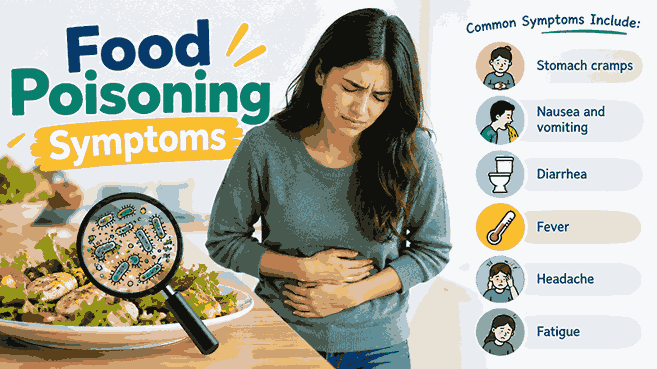
Your body reacts fast when you swallow harmful bacteria, viruses, or parasites. The most frequent food poisoning symptoms include nausea, vomiting, watery diarrhea, and sharp stomach cramps.
A low-grade fever often accompanies these signs. You may also feel weak, sweaty, and unable to keep any food down.
According to the Centers for Disease Control and Prevention (CDC), roughly 48 million Americans experience a foodborne illness each year. Knowing the core signs helps you act before dehydration sets in.
- Nausea and vomiting
- Watery or bloody diarrhea
- Abdominal pain and cramping
- Fever and chills
- Headache and muscle aches
- Loss of appetite
How Quickly Do Food Poisoning Symptoms Appear?
Timing varies depending on the germ you swallowed. Some food poisoning symptoms surface within 30 minutes, while others take several days to show up.
Norovirus, the most common culprit behind outbreaks, typically strikes 12 to 48 hours after exposure. Salmonella infections often appear within six hours to six days.
E. coli takes longer. You might feel perfectly fine for three to four days before severe cramps and bloody diarrhea begin. This delayed onset tricks many people into blaming the wrong meal.
| Pathogen | Onset Time | Key Symptoms | Duration |
| Norovirus | 12–48 hours | Vomiting, diarrhea, cramps | 1–3 days |
| Salmonella | 6 hours–6 days | Diarrhea, fever, cramps | 4–7 days |
| E. coli (O157) | 3–4 days | Severe cramps, bloody diarrhea | 5–10 days |
| Campylobacter | 2–5 days | Diarrhea, fever, nausea | 2–5 days |
| Listeria | 1–4 weeks | Fever, muscle aches, stiff neck | Varies |
| Staph aureus | 30 min–8 hours | Vomiting, nausea, cramps | 1–2 days |
| Clostridium perfringens | 6–24 hours | Diarrhea, cramps | Less than 24 hours |
Data sourced from the U.S. Food and Drug Administration (FDA) Bad Bug Book.
What Are the Early Warning Signs of Food Poisoning?
The first food poisoning symptoms often feel like a mild stomach bug. You notice a strange queasiness that builds quickly after a meal.
Your abdomen may feel bloated and tender. A sudden wave of nausea followed by vomiting is a strong early indicator that your body is trying to expel a toxin.
Pay close attention to timing. If you and someone else ate the same dish and both feel sick within hours, contaminated food is the likely cause.
How Long Do Food Poisoning Symptoms Last?
Most healthy adults recover within 24 to 72 hours. Mild cases caused by Staphylococcus aureus or Clostridium perfringens often resolve in a single day.
More aggressive infections like Salmonella or Campylobacter can drag on for a full week. E. coli cases sometimes persist for 10 days or longer and require medical monitoring.
The World Health Organization (WHO) reports that severe foodborne illnesses can lead to long-term complications, including kidney failure and chronic arthritis, when left untreated.
What Causes Food Poisoning Symptoms After Eating?
Contaminated food carries harmful microorganisms that invade your digestive tract. Bacteria like Salmonella and Listeria multiply rapidly in improperly stored meat, dairy, and eggs.
Viruses spread through infected food handlers who skip handwashing. Norovirus thrives on raw shellfish, leafy greens, and ready-to-eat deli items.
Parasites such as Giardia and Cryptosporidium hide in untreated water and unwashed produce. Each pathogen triggers a slightly different pattern of food poisoning symptoms, which is why identifying the source matters.
When Should You See a Doctor for Food Poisoning Symptoms?
Most cases resolve on their own, but certain red flags demand immediate medical attention. Call your doctor or visit the ER if you experience any of the following:
- Blood in your stool or vomit
- A fever above 102°F (38.9°C)
- Signs of severe dehydration (dry mouth, dizziness, dark urine)
- Diarrhea lasting more than three days
- Blurred vision or muscle weakness
- Inability to keep liquids down for 24 hours
Pregnant women, infants, adults over 65, and immunocompromised individuals face higher risks. These groups should seek care at the first sign of food poisoning symptoms rather than waiting.
What Are the Food Poisoning Symptoms in Children and the Elderly?
Young children and older adults dehydrate much faster than healthy adults. In infants, watch for a sunken soft spot on the head, no tears when crying, and fewer wet diapers.
Elderly patients may show confusion, extreme fatigue, and a rapid heartbeat alongside the typical vomiting and diarrhea. Their immune systems struggle to fight off Listeria and E. coli.
Act quickly. Dehydration in these vulnerable groups can become life-threatening within hours.
How Do You Treat Food Poisoning Symptoms at Home?
Rest and hydration form the backbone of recovery. Sip clear fluids like water, oral rehydration solutions, and diluted broths throughout the day.
Avoid dairy, caffeine, alcohol, and greasy foods until your stomach settles. Ease back into eating with bland options like bananas, rice, applesauce, and plain toast (the BRAT diet).
Over-the-counter anti-diarrheal medications can help adults in mild cases. Never give these to children without a pediatrician’s approval, as they can trap toxins inside the gut.
- Drink small sips every 10–15 minutes
- Use oral rehydration salts (Pedialyte, WHO formula)
- Rest in a cool, comfortable room
- Avoid solid food until vomiting stops for several hours
- Gradually reintroduce bland foods
What Are the Most Dangerous Food Poisoning Symptoms?
Certain warning signs point to life-threatening complications. Bloody diarrhea paired with severe abdominal pain may signal an E. coli O157:H7 infection, which can trigger hemolytic uremic syndrome (HUS) and kidney failure.
A stiff neck, confusion, and high fever suggest Listeria has spread to the nervous system. This condition, called meningitis, requires emergency antibiotic treatment.
Botulism, though rare, causes drooping eyelids, slurred speech, and difficulty swallowing. Call 911 immediately if these neurological food poisoning symptoms appear after eating home-canned foods.
How Can You Prevent Food Poisoning Symptoms Entirely?
Prevention starts in your kitchen. Follow the FDA’s four core food safety steps to slash your risk dramatically:
- Clean — Wash hands, cutting boards, and countertops with hot soapy water before and after handling food.
- Separate — Keep raw meat, poultry, and seafood away from ready-to-eat items.
- Cook — Use a food thermometer to ensure meats reach safe internal temperatures (165°F for poultry, 145°F for fish).
- Chill — Refrigerate perishable foods within two hours, or one hour if the room temperature exceeds 90°F.
Wash all fruits and vegetables under running water, even if you plan to peel them. Avoid raw sprouts, unpasteurized milk, and undercooked eggs when you belong to a high-risk group.
What Foods Most Often Trigger Food Poisoning Symptoms?
Some foods carry higher contamination risks than others. Raw or undercooked poultry tops the list, followed closely by ground beef and unpasteurized dairy products.
Leafy greens like spinach and romaine lettuce frequently appear in CDC outbreak reports. Contaminated irrigation water and poor handling during packaging introduce E. coli and Salmonella to these crops.
Raw oysters and clams filter harmful Vibrio bacteria from ocean water. Deli meats and soft cheeses pose a Listeria threat, especially for pregnant women.
Can Food Poisoning Symptoms Mimic Other Illnesses?
Yes, and this overlap causes frequent misdiagnosis. The nausea, cramping, and diarrhea from food poisoning symptoms closely resemble the stomach flu (viral gastroenteritis), irritable bowel syndrome flare-ups, and even appendicitis.
The key differentiator is timing and context. Foodborne illness usually strikes multiple people who shared a meal, while the stomach flu spreads person-to-person over days.
If your symptoms persist beyond a week or worsen despite home treatment, consult a healthcare provider for stool testing and an accurate diagnosis.
Frequently Asked Questions
1. What are the first food poisoning symptoms to watch for?
Nausea and stomach cramps are usually the earliest signs. Vomiting and diarrhea follow within hours as your body tries to flush out the contaminant.
2. How long does it take for food poisoning symptoms to start?
Onset ranges from 30 minutes (Staph toxin) to several weeks (Listeria). Most common infections appear within 6 to 48 hours after eating contaminated food.
3. Can food poisoning symptoms go away on their own?
Yes. Mild cases typically resolve within one to three days with rest and hydration. Severe or prolonged symptoms require medical evaluation.
4. Are food poisoning symptoms different from a stomach virus?
Food poisoning symptoms appear suddenly after a specific meal and often affect multiple diners. A stomach virus spreads gradually from person to person and lasts longer.
5. What should I eat after food poisoning symptoms stop?
Start with bland, easy-to-digest foods like rice, bananas, toast, and clear broth. Avoid spicy, fatty, and dairy-rich meals for at least 48 hours.
6. When are food poisoning symptoms considered an emergency?
Seek immediate care for bloody stools, fever above 102°F, signs of severe dehydration, neurological changes, or symptoms lasting more than three days.
Conclusion
Recognizing food poisoning symptoms early gives you the power to act fast, stay hydrated, and avoid dangerous complications. Most cases pass within a few days, but your body needs the right support to heal properly.
Bookmark this guide, share it with your family, and keep your kitchen safe by following proper food handling practices. If your symptoms escalate or refuse to improve, do not wait — contact your doctor or visit the nearest emergency room.
Your health is not worth the gamble. Stay informed, stay prepared, and protect the people you love from preventable foodborne illness.