Muslim Food Delivery: Your Complete Guide to Ordering Halal Meals Online
Finding trustworthy halal meals delivered to your door feels impossible. You scroll through apps, unsure if the kitchen truly follows Islamic dietary laws or simply slaps a label on the menu. That uncertainty puts your faith and health at risk. This guide cuts through the noise and shows you exactly how muslim food delivery works, where to order, and what to verify before your next meal arrives.
What Is Muslim Food Delivery and How Does It Work?
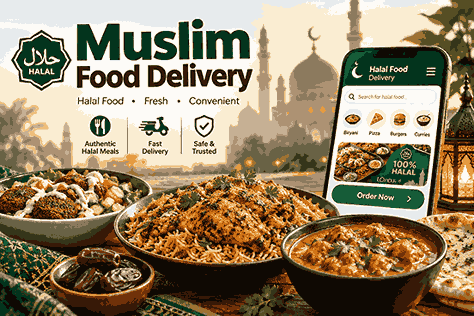
Muslim food delivery connects you with restaurants and kitchens that prepare meals according to Islamic dietary laws. You browse a menu, place your order through an app or website, and a driver brings certified halal food straight to your home.
The process mirrors standard food delivery but adds a critical layer of verification. Every ingredient, preparation surface, and cooking method must comply with Quranic guidelines outlined in Surah Al-Baqarah (2:173).
Platforms partner with halal-certified restaurants, local butchers, and cloud kitchens. You filter by certification type, cuisine, and delivery radius to find meals that align with your standards.
Halal Certification Standards You Must Know Before Ordering
Not all halal labels carry equal weight. The Islamic Food and Nutrition Council of America (IFANCA) sets one of the strictest certification benchmarks in North America. Their process audits the full supply chain from slaughter to packaging (ifanca.org).
The Halal Monitoring Committee (HMC) operates similarly across Europe, conducting unannounced inspections of slaughterhouses and restaurant kitchens (hmceurope.com).
Look for these three markers on any restaurant listing:
- A visible certification logo from a recognized body (IFANCA, HMC, or JAKIM)
- A current certification number you can verify online
- Clear disclosure of the certifying organization’s name
Restaurants that only write “halal-friendly” without naming a certifier deserve extra scrutiny.
Top Platforms Offering Reliable Muslim Food Delivery
Several mainstream and niche platforms now support halal-specific ordering. Here is where you will find the widest selection of verified options.
Zabihah.com remains the largest global directory of halal restaurants. Their app lets you filter by zabiha status, prayer space availability, and alcohol-free environments.
Uber Eats and DoorDash both added halal filters in major metropolitan areas. Search “halal” in the cuisine category to surface certified partners near you.
Halal Meals Co. and Boxed Halal specialize in pre-cooked and frozen halal meal delivery. They ship nationwide and source exclusively from zabiha-slaughtered farms.
How to Verify Halal Authenticity in Delivered Meals
Trust but verify. A restaurant listing “halal” on a third-party app does not guarantee compliance. Take these steps before your first order.
Call the restaurant directly and ask which organization issued their halal certificate. Request the expiration date.
Check the certifier’s website for the restaurant’s active status. IFANCA and HMC both maintain searchable databases.
Read customer reviews on Zabihah.com. Muslim diners frequently flag cross-contamination issues and expired certifications that apps miss.
Zabiha Halal vs. Standard Halal: What Changes Your Order
Zabiha halal refers to meat slaughtered by a practicing Muslim who invokes the name of Allah at the time of slaughter. The animal must be healthy, conscious, and killed with a swift cut to the throat.
Standard halal certifications sometimes accept machine slaughter or meat from People of the Book (Christian and Jewish suppliers) under specific scholarly interpretations.
Your choice between zabiha and standard halal depends on your personal madhab (school of thought). When you use muslim food delivery services, filter specifically for “zabiha hand-slaughtered” to match the strictest standard.
Muslim Food Delivery Apps Compared: Features and Coverage
| Platform | Halal Filter | Zabiha Option | Coverage Area | Avg. Delivery Fee | Certification Display |
| Zabihah.com | Yes | Yes | Global (20,000+ listings) | Varies by restaurant | Full details |
| Uber Eats | Yes | Limited | 40+ countries | $2.99–$5.99 | Partial |
| DoorDash | Yes | Limited | US, Canada, Australia | $1.99–$5.99 | Partial |
| Halal Meals Co. | Yes | Yes | US nationwide | $7.99 flat | Full details |
| Boxed Halal | Yes | Yes | US nationwide | $9.99 flat | Full details |
| Grubhub | Yes | No | US metro areas | $1.99–$4.99 | Minimal |
Zabihah.com offers the deepest verification data. Mainstream apps provide convenience but require you to double-check certifications independently.
Common Haram Ingredients Hidden in Restaurant Meals
Even well-meaning kitchens sometimes include haram components in dishes that appear safe. Watch for these hidden offenders.
- Gelatin in desserts, marshmallows, and yogurt (often pork-derived)
- Vanilla extract containing alcohol above trace levels
- Carmine (E120) red food coloring made from crushed insects
- L-cysteine dough conditioner sourced from human hair or pork bristles
- Wine-based sauces in pasta, risotto, and French cuisine
- Rennet in cheese made from non-halal animal stomachs
Ask the restaurant to confirm each ingredient when you place a muslim food delivery order. A quick phone call prevents doubt later.
How to Order Halal Groceries and Meal Prep Online
Halal grocery delivery has grown rapidly. Services like Midamar, Crescent Foods, and One Stop Halal ship fresh zabiha meat, poultry, and pantry staples to your door.
Meal prep services now cater to Muslim professionals and families. Halal Meal Prep and Saffron Road deliver pre-portioned, macro-counted halal meals weekly.
These services solve a real problem for Muslims living in areas with limited halal butcher shops. According to Pew Research Center data, the U.S. Muslim population reached approximately 3.85 million in 2020 and continues to grow, driving demand for accessible halal food infrastructure (pewresearch.org).
Muslim Food Delivery for Special Events and Catering
Ramadan iftars, Eid celebrations, and wedding walimas require large-volume halal catering. Standard restaurant delivery rarely scales to 50+ guests.
Specialized halal caterers like The Halal Guys Catering and local mosque-affiliated kitchens handle bulk orders with proper zabiha sourcing.
Book at least two weeks ahead during Ramadan. Demand for muslim food delivery spikes dramatically, and popular kitchens sell out of signature dishes by the second week of fasting.
Pricing Breakdown: What Halal Delivery Actually Costs
Halal meals typically cost 10–25% more than conventional equivalents. The price gap reflects higher sourcing costs for certified zabiha meat and smaller supply chains.
Expect these average ranges:
- Single entrée delivery: $12–$18 plus fees
- Family meal bundles (4 servings): $35–$55
- Weekly halal meal prep (10 meals): $85–$130
- Halal grocery box (meat and staples): $60–$100
Many muslim food delivery platforms offer loyalty programs and first-order discounts that narrow the gap. Stack coupon codes with free-delivery thresholds to keep costs manageable.
Regional Availability of Muslim Food Delivery Services
Major metro areas like New York, Chicago, Houston, Dearborn, and Toronto offer the densest halal delivery networks. You will find dozens of certified options within a five-mile radius.
Suburban and rural areas present more challenges. In these regions, frozen halal meal delivery services and grocery shipping fill the gap where hot food delivery falls short.
The growth of cloud kitchens (delivery-only restaurants) is expanding halal access to underserved communities. Several Muslim entrepreneurs now operate ghost kitchens that serve halal biryani, shawarma, and fried chicken exclusively through delivery apps.
Tips for First-Time Halal Food Delivery Customers
Start with a platform you already trust, like Uber Eats or DoorDash, and apply the halal filter. This reduces the learning curve while you explore new options.
Order from restaurants with 4.5+ star ratings and at least 100 reviews from Muslim diners on Zabihah.com.
Specify your requirements in the delivery notes. Write “strictly halal, no cross-contamination with pork or alcohol-based ingredients” to alert the kitchen staff.
Keep a shortlist of three to five reliable restaurants. Rotating between them gives you variety without repeating the verification process every week.
Frequently Asked Questions About Muslim Food Delivery
Is muslim food delivery available in rural areas?
Yes, but options remain limited. Frozen halal meal services like Boxed Halal and Crescent Foods ship nationwide via FedEx or UPS. Hot food delivery depends on local restaurant density within a 10-mile radius.
How do I know if a delivery restaurant is truly halal
Verify the restaurant’s certification through IFANCA or HMC databases. Cross-reference with Zabihah.com reviews from Muslim diners. Call the restaurant to confirm their certifier and certificate expiration date.
Can I schedule muslim food delivery around specific prayer times?
Most apps allow scheduled orders up to seven days in advance. Set your delivery window to arrive after Maghrib during Ramadan or before Jumu’ah on Fridays for the freshest meals.
What is the difference between halal and zabiha halal delivery?
Zabiha halal requires hand slaughter by a Muslim with a verbal invocation of Allah’s name. Standard halal may accept machine slaughter or meat from People of the Book. Filter for “zabiha” on dedicated platforms.
Are cross-contamination risks real with muslim food delivery?
Yes. Shared fryers, grills, and prep surfaces in non-halal kitchens introduce haram traces into your meal. Order from 100% halal kitchens or restaurants with dedicated halal prep stations to eliminate this risk.
Do muslim food delivery services offer vegetarian halal options?
Absolutely. Vegetarian and vegan meals are inherently halal as long as they exclude alcohol-based flavorings and haram additives. Most halal delivery platforms feature extensive plant-based menus.
Conclusion
Your dietary choices reflect your values, and you deserve a delivery experience that respects them fully. Stop guessing whether your food meets Islamic standards. Start verifying, ordering with confidence, and supporting the halal businesses that earn your trust.
Open Zabihah.com or your preferred delivery app right now. Apply the halal filter, check one certification, and place your first verified order tonight. Your next meal should nourish both your body and your iman — and that starts with a single, informed click