Mediterranean Food: The Complete Guide to Dishes, Health Benefits, and Easy Recipes
You want to eat healthier but feel overwhelmed by complicated diet plans and restrictive rules. Most trendy diets leave you hungry, frustrated, and right back where you started within weeks. Mediterranean food offers a delicious, sustainable way to nourish your body with real ingredients without ever sacrificing flavor or satisfaction.
What Is Mediterranean Food and Why Does It Matter?
Mediterranean food refers to the traditional eating patterns of countries bordering the Mediterranean Sea, including Greece, Italy, Spain, Lebanon, and Turkey. This cuisine centers on fresh vegetables, olive oil, whole grains, legumes, and lean proteins like fish and poultry.
Researchers at the Harvard T.H. Chan School of Public Health confirm that people who follow this eating pattern live longer and develop fewer chronic diseases. The emphasis on whole, minimally processed ingredients sets this cuisine apart from most modern Western diets.
How Does Mediterranean Food Improve Heart Health?
The World Health Organization states that heart disease continues to be the primary cause of death globally. This eating style directly combats that crisis through its high content of monounsaturated fats, omega-3 fatty acids, and antioxidants.
Extra virgin olive oil, a cornerstone of mediterranean food, reduces LDL cholesterol and lowers blood pressure. Fatty fish like salmon and sardines deliver omega-3s that prevent arterial inflammation and irregular heart rhythms.
- Olive oil replaces butter and margarine in nearly every dish
- Nuts and seeds provide heart-protective vitamin E
- Fresh tomatoes supply lycopene, a powerful antioxidant
- Red wine in moderation supports cardiovascular function
Which Countries Shape Mediterranean Food Traditions?
Each country along the Mediterranean coast contributes unique flavors and techniques to this shared culinary heritage. Greek cuisine brings feta cheese, olives, and grilled lamb to the table. Italian cooking adds fresh pasta, basil, and San Marzano tomatoes.
Spanish kitchens feature saffron-infused paella, gazpacho, and jamón ibérico. Lebanese and Turkish cooks contribute hummus, tabbouleh, and perfectly charred kebabs. Together, these traditions create one of the most diverse and flavorful food cultures on Earth.
What Are the Most Popular Mediterranean Food Dishes?
If you want to experience the best of this cuisine, start with these crowd-pleasing classics:
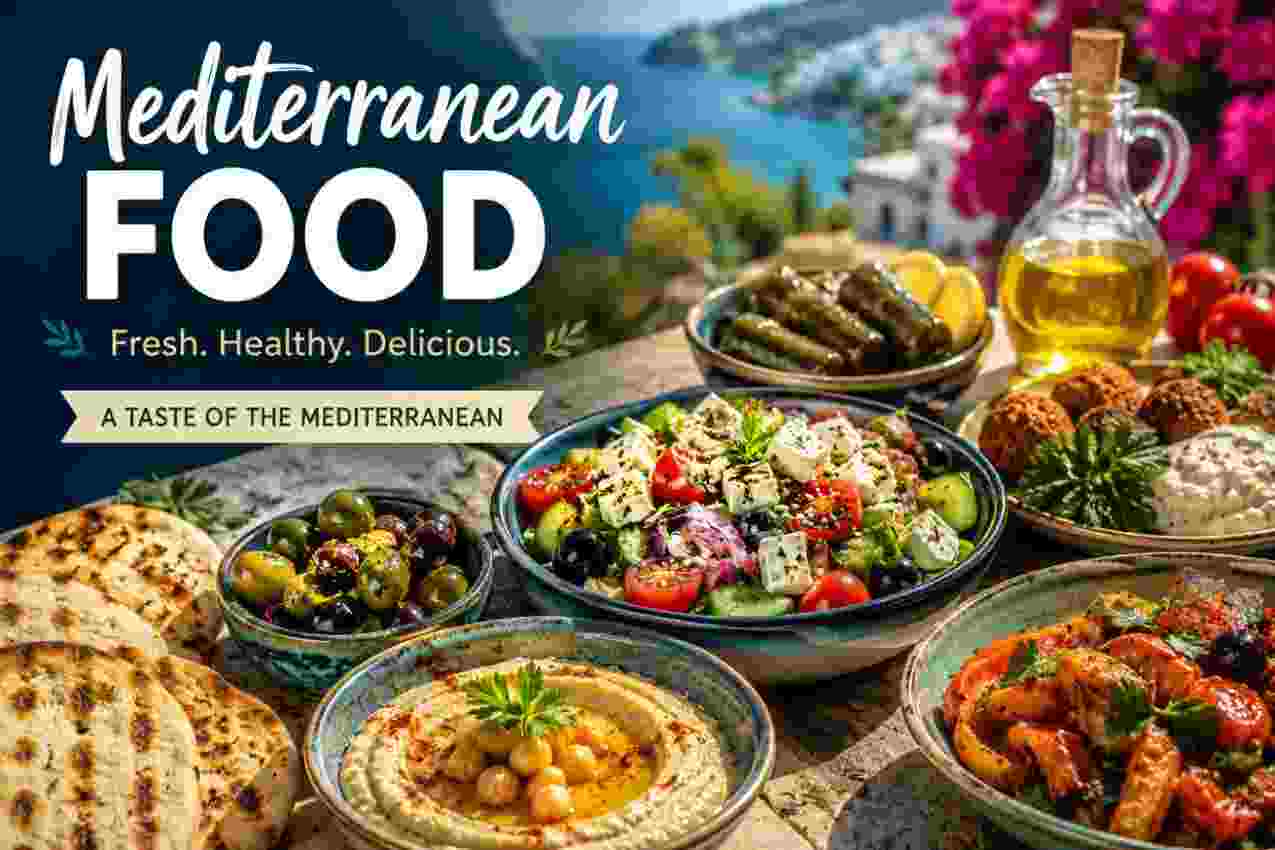
- Greek salad — ripe tomatoes, cucumbers, red onion, Kalamata olives, and crumbled feta drizzled with olive oil
- Hummus — creamy blended chickpeas, tahini, garlic, and lemon juice served with warm pita
- Falafel — crispy fried chickpea patties packed with fresh herbs and spices
- Shakshuka — poached eggs simmered in a spiced tomato and pepper sauce
- Grilled octopus — tender charred tentacles finished with lemon and capers
- Moussaka — layered eggplant, spiced lamb, and creamy béchamel sauce
Each of these dishes represents the core philosophy of mediterranean food: simple ingredients, bold flavors, and generous portions of vegetables.
How Does the Mediterranean Food Pyramid Work?
The Mediterranean food pyramid guides daily eating habits by ranking food groups from most to least frequent. At the base, you find fruits, vegetables, whole grains, olive oil, beans, nuts, and herbs. These foods should appear at every meal.
The middle tier includes fish, seafood, poultry, eggs, and dairy products like yogurt and cheese. Aim for these foods a few times per week. At the top, red meat and sweets occupy the smallest space, reserved for occasional enjoyment.
| Food Group | Frequency | Examples |
| Vegetables & Fruits | Every meal | Tomatoes, spinach, figs, lemons |
| Whole Grains | Every meal | Bulgur, farro, whole wheat pita |
| Healthy Fats | Every meal | Extra virgin olive oil, almonds, walnuts |
| Fish & Seafood | 2–3 times/week | Salmon, sardines, shrimp, mussels |
| Poultry & Eggs | 2–3 times/week | Chicken, turkey, free-range eggs |
| Dairy | Daily in moderation | Greek yogurt, feta, halloumi |
| Red Meat | 1–2 times/month | Lamb, beef (small portions) |
| Sweets | Rarely | Honey-drizzled baklava, fresh fruit |
This pyramid makes the lifestyle easy to follow because it focuses on abundance rather than restriction.
Can Mediterranean Food Help You Lose Weight?
Yes. The American Heart Association recognizes this eating pattern as an effective approach for healthy weight management. Mediterranean food keeps you full longer thanks to its high fiber content from vegetables, legumes, and whole grains.
Unlike low-carb or low-fat diets, this approach does not eliminate entire food groups. You eat satisfying meals rich in healthy fats and complex carbohydrates. Studies show that people who adopt these eating habits lose weight steadily and keep it off for years.
What Ingredients Define Authentic Mediterranean Food?
Stock your kitchen with these essential ingredients to cook authentic meals at home:
- Extra virgin olive oil — the non-negotiable foundation of every dish
- Fresh herbs — oregano, basil, parsley, mint, dill, and rosemary
- Garlic and onions — the aromatic base for soups, stews, and sauces
- Lemons — used for dressing, marinating, and brightening flavors
- Canned tomatoes — San Marzano variety for the richest taste
- Chickpeas and lentils — affordable protein sources packed with fiber
- Feta and halloumi cheese — salty, tangy dairy staples
- Kalamata olives — briny and rich in healthy fats
When you build meals around these ingredients, you automatically create dishes that align with mediterranean food principles.
How Do You Start Cooking Mediterranean Food at Home?
Begin with three simple swaps that transform your daily meals. Replace butter with extra virgin olive oil for sautéing and baking. Trade processed snacks for a handful of mixed nuts and fresh fruit. Switch white bread for whole grain pita or sourdough.
Next, plan two fish dinners per week. Grill a salmon fillet with lemon and dill, or bake sardines with cherry tomatoes and capers. These quick preparations take under 20 minutes and deliver the full benefits of this cuisine without complicated techniques.
Is Mediterranean Food Suitable for Vegetarians and Vegans?
Absolutely. Plant-based eaters thrive on this cuisine because it already centers on vegetables, legumes, grains, and nuts. Classic dishes like hummus, falafel, stuffed grape leaves, and lentil soup contain no animal products at all.
Vegan mediterranean food swaps are simple. Replace feta with crumbled tofu marinated in lemon and oregano. Use tahini instead of yogurt in dressings. The abundance of fresh produce and bold spices ensures you never feel deprived.
How Does Mediterranean Food Compare to Other Popular Diets?
| Feature | Mediterranean Food | Keto | Paleo | Vegan |
| Sustainability | Very high | Low | Moderate | High |
| Heart health | Excellent | Mixed | Good | Good |
| Weight loss | Steady | Fast initial | Moderate | Moderate |
| Ease of following | Easy | Difficult | Moderate | Moderate |
| Nutrient diversity | Very high | Low | Moderate | High |
| Cost | Affordable | Expensive | Expensive | Affordable |
Mediterranean food outperforms most diets in long-term sustainability and overall health outcomes. You eat real food without counting macros or eliminating entire food groups.
What Are the Best Mediterranean Food Recipes for Beginners?
Start with these three foolproof recipes that require minimal prep and deliver maximum flavor:
1. One-Pan Lemon Herb Chicken
Season chicken thighs with oregano, garlic, and lemon juice. Roast at 400°F with cherry tomatoes and red onion for 35 minutes. Serve over couscous.
2. Classic Greek Salad
Chop tomatoes, cucumbers, and red onion. Add Kalamata olives and a block of feta. Drizzle generously with olive oil and red wine vinegar.
3. 10-Minute Hummus
Blend one can of chickpeas with tahini, garlic, lemon juice, and a splash of ice water until silky smooth. Top with paprika and olive oil.
These beginner-friendly dishes prove that mediterranean food does not require advanced culinary skills or hard-to-find ingredients.
Where Can You Find the Best Mediterranean Food Near You?
Search for local Greek, Lebanese, or Turkish restaurants in your area. Look for menus that feature grilled meats, fresh salads, and house-made dips. Authentic spots typically display imported olive oil and fresh herbs prominently.
Farmers markets also supply the freshest produce for home cooking. Seasonal vegetables, local honey, and artisan cheeses bring the spirit of mediterranean food straight to your kitchen table.
Frequently Asked Questions
Q: What is the healthiest mediterranean food dish?
A: Grilled fish with olive oil, lemon, and steamed vegetables ranks as the healthiest mediterranean food option. It delivers omega-3 fatty acids, antioxidants, and lean protein in a single plate.
Q: Is mediterranean food good for weight loss?
A: Yes. The high fiber and healthy fat content in mediterranean food keeps you full longer, reducing overall calorie intake without hunger or deprivation.
Q: What are the main spices in mediterranean food?
A: Oregano, cumin, paprika, cinnamon, sumac, and za’atar form the core spice palette. Fresh herbs like parsley, mint, and basil appear in nearly every mediterranean food recipe.
Q: Can you eat mediterranean food on a budget?
A: Absolutely. Beans, lentils, seasonal vegetables, and whole grains cost very little. Canned fish like sardines provides affordable omega-3s for any mediterranean food meal plan.
Q: Is mediterranean food gluten-free?
A: Many mediterranean food dishes are naturally gluten-free, including grilled meats, salads, and rice-based meals. Swap pita for lettuce wraps or gluten-free bread when needed.
Q: How many times a week should you eat mediterranean food?
A: Aim for at least four to five mediterranean food meals per week. Even partial adoption delivers measurable improvements in heart health and energy levels